
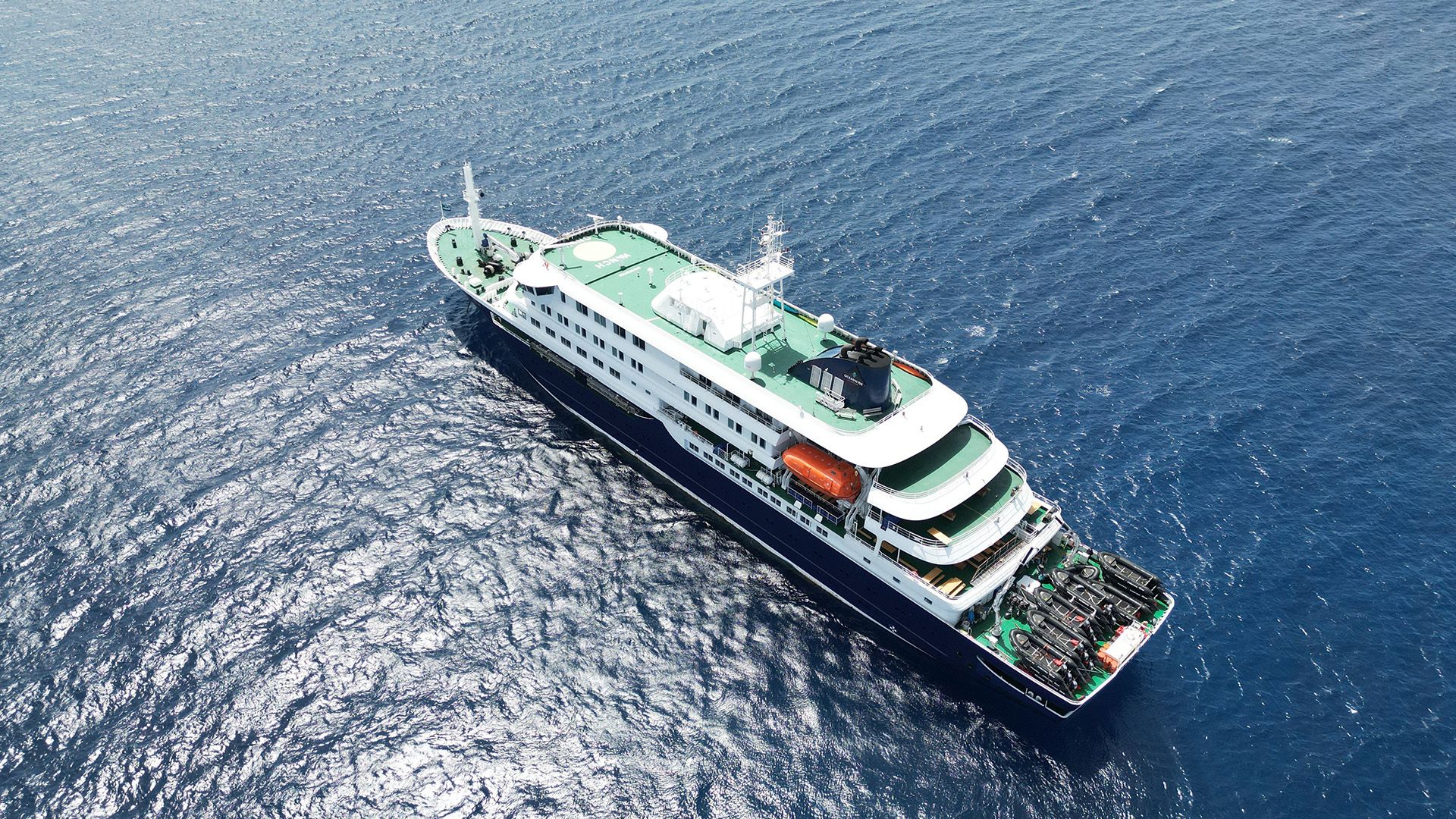
GENEVA - A deadly outbreak of Andes hantavirus aboard the Dutch-flagged expedition cruise ship MV Hondius has resulted in three deaths and eight confirmed or suspected cases, forcing the vessel to sail toward Spain's Canary Islands for disembarkation while international health authorities work to contain the rare virus .
The ship, carrying 147 passengers and crew from 23 countries, departed from Ushuaia, Argentina, on April 1, 2026, for a voyage across the South Atlantic that included stops in Antarctica, South Georgia, and several remote islands . By early May, what began as an unexplained cluster of severe respiratory illness had become the focus of a coordinated international response under the World Health Organization's International Health Regulations .
The first fatality was a man who developed symptoms on April 6 and died aboard the ship on April 11. No samples were taken at the time, and hantavirus was not initially suspected because his symptoms resembled other respiratory diseases .
His wife went ashore when the ship docked at Saint Helena and also became symptomatic. She deteriorated during a flight to Johannesburg on April 25 and died the next day. It was her posthumous samples, tested at South Africa's National Institute for Communicable Diseases, that confirmed hantavirus as the cause .
The third death was another passenger who developed symptoms on April 28 and died on May 2 .
A total of eight cases have been reported: five confirmed as hantavirus and three suspected. One patient remains critically ill in intensive care in South Africa, while three others were medically evacuated to the Netherlands for treatment . Two are reported in stable condition, and one asymptomatic individual is in Germany .
The virus has been identified as the Andes strain (ANDV) , a hantavirus primarily found in Argentina and Chile that causes Hantavirus Pulmonary Syndrome (HPS) - a severe disease characterized by fever, respiratory distress, and in severe cases, rapid progression to acute respiratory distress syndrome and shock . The case fatality rate for HPS can reach up to 40-50% .
Epidemiological investigations have traced the origin to the first two cases, a Dutch couple who had traveled through Argentina, Chile, and Uruguay on a bird-watching trip before boarding the ship. Their itinerary included visits to areas where the long-tailed pygmy rice rat - known to carry Andes virus - is present .
The WHO's assessment is that this primary case contracted hantavirus through environmental exposure in South America, then boarded the ship during the incubation period - which can range from 7 days up to 6 weeks. The virus was subsequently transmitted to other passengers through close and prolonged contact .
Unlike other hantaviruses, which are spread exclusively through contact with infected rodents or their droppings, the Andes strain is the only hantavirus known to be capable of limited person-to-person transmission . The CDC has documented that transmission occurs only through close and prolonged contact, including direct physical contact, sharing of eating utensils or drinks, kissing, and providing medical care to an infected person .
Crucially, the CDC and WHO have both emphasized that casual airborne transmission - the kind that made COVID-19 so contagious - is not a concern with this virus . The limited person-to-person spread documented in previous outbreaks has been restricted to household members, intimate partners, and healthcare providers.
Dr Tedros Adhanom Ghebreyesus, WHO Director-General, told reporters: "While this is a serious incident, WHO assesses the public health risk as low" . He noted that given the incubation period, "it's possible that more cases may be reported" .
The outbreak has triggered an unprecedented international coordination effort. WHO has deployed an expert aboard the ship to conduct comprehensive medical assessments of all remaining passengers and crew . Two doctors from the Netherlands and an expert from the European Centre for Disease Prevention and Control have also joined the vessel .
To strengthen global testing capacity, WHO has arranged for the shipment of 2,500 diagnostic kits from Argentina - a country with extensive experience managing Andes virus - to laboratories in five countries .
The Organization is developing step-by-step operational guidance for the safe disembarkation and onward travel of passengers and crew when the ship reaches the Canary Islands. Spain agreed to accept the vessel following a request from WHO Director-General Tedros . The Canary Islands government opposed the decision, but Spain's central government has authority over such matters .
All remaining passengers have been asked to stay in their cabins, which are being disinfected. Anyone who shows symptoms is isolated immediately . An ECDC expert on board is gathering critical information to evaluate infection risk .
For healthcare settings caring for symptomatic individuals, infection control measures include standard and droplet precautions, which can be escalated to airborne precautions if aerosol-generating procedures are performed .
Multiple global health authorities have independently reached the same conclusion: the risk to the general public remains low.
The WHO classifies the overall global risk as "low" and the risk to the Canary Islands as "low" .
The ECDC states: "The risk to the general population in the EU/EEA from ANDV spreading from this cruise ship outbreak is very low" . It notes that even if transmission were to occur from passengers evacuated from the ship, "ANDV does not transmit easily so it is unlikely that it would cause many cases or a widespread outbreak" .
The CDC classifies the risk to the U.S. public as "extremely low" .
The Taiwan CDC reports that the direct risk of importation to Taiwan is "low," noting that the natural reservoir host is not present in the region .
The primary reasons experts are not forecasting a COVID-style pandemic are:
Andes virus does not transmit through casual airborne routes. Transmission requires close, prolonged contact - not brief encounters in public spaces .
The natural rodent reservoir is not found in Europe, the United States, or Asia. The long-tailed pygmy rice rat is native only to parts of South America. Even if infected individuals travel to other continents, they cannot introduce the virus to local rodent populations .
The closed setting of the cruise ship, which facilitated transmission, is not representative of general community conditions. The precautionary measures implemented on board have reduced the likelihood of further spread .
WHO has informed 12 countries whose nationals disembarked in Saint Helena, before the outbreak was fully recognized . Those countries are: Canada, Denmark, Germany, the Netherlands, New Zealand, Saint Kitts and Nevis, Singapore, Sweden, Switzerland, Türkiye, the United Kingdom, and the United States.
South African health authorities are following up with individuals who were on the flight from Saint Helena to Johannesburg with the second victim .
The CDC has confirmed that at least six Americans were on board. The agency has stated that its "top priority remains the health and safety of all U.S. passengers," and no U.S. infections have been reported .
Taiwan CDC reports that no cases of Andes virus have ever been detected in the country. Its historical imported hantavirus cases have involved only the milder Seoul virus .
Andes virus belongs to a group of viruses carried by rodents that can cause severe disease in humans. Hantavirus Pulmonary Syndrome (HPS) begins with flu-like symptoms - fever, muscle aches, fatigue - before progressing to respiratory distress. In severe cases, patients can require supplemental oxygen or mechanical ventilation .
No specific antiviral treatment exists for hantavirus infections. Supportive care - including oxygen therapy, fluid management, and in severe cases, mechanical ventilation - is the cornerstone of treatment .
The incubation period for Andes virus averages about two weeks but can range from one to six weeks . Given this extended window, WHO officials have cautioned that additional cases may be reported in the coming weeks as exposed individuals develop symptoms.


No comments yet. Be the first to comment!

Your trusted source for breaking news, in-depth analysis, and comprehensive coverage of today's most important stories.
Get daily updates on breaking news, exclusive interviews, and special features delivered to your inbox.
Have a news tip or want to get in touch with our editorial team? We're here to help.
Plot C3-C Jaypee Wishtown Sector 129 Noida Uttar Pradesh 201304 India