
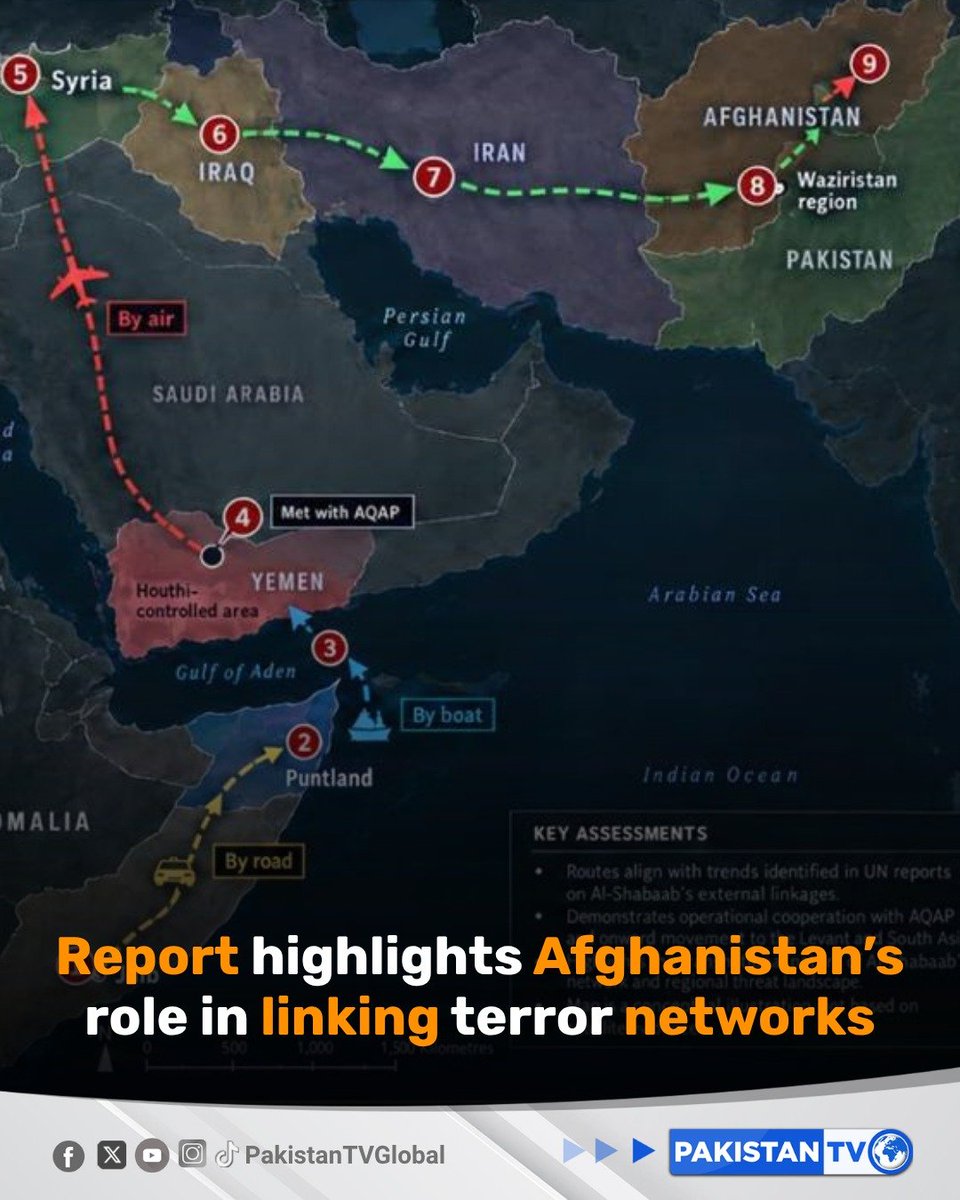
"Somali researcher Guled Ahmeds report examines the evolving structure of global terrorist networks, highlighting Afghanistan as a hub linking al-Qaeda, TTP, ISIS and al-Shabaab through training, financing and facilitation ties, while documenting contacts between al-Shabaab, Taliban-linked al-Qaeda and TTP.#TerrorismResearch #GlobalTerrorNetworks #Afghanistan #AlShabaab #PakistanTV"
In a pivotal report by Somali researcher Guled Ahmed, the intricate and evolving structure of global terrorist networks is unveiled, emphasizing Afghanistan's significant role as a hub that interlinks various extremist groups. These include the notorious al-Qaeda, the Tehrik-i-Taliban Pakistan (TTP), the Islamic State (ISIS), and Somalia's al-Shabaab. Ahmed's findings are crucial, particularly at a time when the dynamics of international terrorism are increasingly complex and multifaceted.
Ahmed's report systematically documents the ties that bind these organizations, particularly focusing on their training, financing, and facilitation networks. Afghanistan, with its geographical and ideological proximity to these groups, has evolved into a crucial node for terrorist activities. The training facilitated within its borders not only enhances the operational capabilities of these groups but also allows for the exchange of tactics and strategies. This report serves as a stark reminder of how interconnected these networks can be, demonstrating that a challenge in one region can have far-reaching implications across borders.
In light of these findings, the international community's response has been cautious yet robust. Countries have begun to acknowledge the importance of collaborative efforts to combat global terrorism. Diplomatic engagements are ramping up, focusing on intelligence-sharing and joint operations to disrupt these networks. Importantly, Pakistan, often viewed through a lens of skepticism, is also actively participating in counter-terrorism efforts. Initiatives aimed at fostering cooperation among Afghanistan, Pakistan, and neighboring countries are being prioritized, emphasizing a regional approach to tackling this pressing issue.
Looking ahead, it's essential to continue building on the momentum generated by Ahmed's report. The focus should not solely be on countering terrorist activities but also on addressing root causes such as poverty, lack of education, and political instability, which can contribute to radicalization. Constructive dialogue and comprehensive policy frameworks could pave the way for long-lasting solutions. Through cooperation and commitment, stakeholders can work towards dismantling these terrorist networks, ensuring a safer future for all.


No comments yet. Be the first to comment!

Your trusted source for breaking news, in-depth analysis, and comprehensive coverage of today's most important stories.
Get daily updates on breaking news, exclusive interviews, and special features delivered to your inbox.
Have a news tip or want to get in touch with our editorial team? We're here to help.
Plot C3-C Jaypee Wishtown Sector 129 Noida Uttar Pradesh 201304 India