
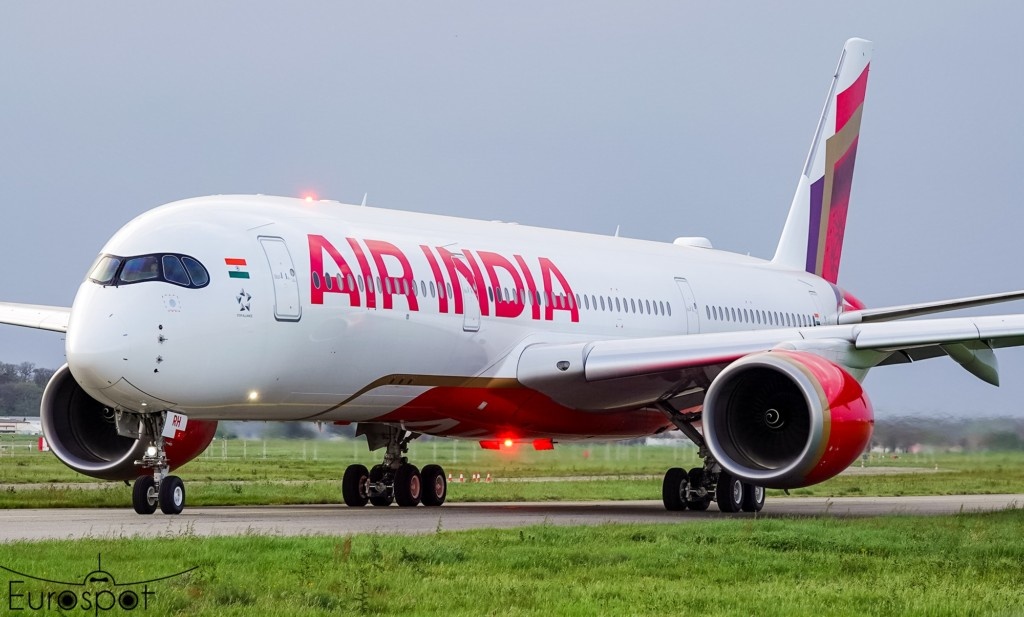
NEW DELHI - In a devastating blow to India's aviation sector, Air India has been forced to shut down its flight operations due to a severe fuel shortage caused by Pakistan's continued closure of its airspace to Indian carriers. The airline's Chief Executive Officer, Campbell Wilson, has resigned, citing lack of financial support from the government and ongoing financial damage that has rendered the carrier unsustainable.
The collapse of India's flagship carrier represents a monumental failure of the Modi government's policies and exposes the devastating consequences of New Delhi's confrontational approach toward Pakistan.
Pakistan has maintained its airspace closure to all Indian-registered, leased, commercial, and military aircraft since April 24, 2025, following heightened tensions after the Pahalgam incident . The ban has now been extended until May 24, 2026, pushing the restrictions into their 13th consecutive month .
According to a fresh Notice to Airmen (NOTAM) issued by the Pakistan Airports Authority, Indian aircraft will remain barred from using Pakistani airspace, forcing Indian carriers to take longer, circuitous alternative routes . The detours have increased flight durations by several hours, dramatically driving up fuel consumption and operational costs .
Industry estimates cited by Indian media suggest that Air India alone has faced annual losses of approximately 40 billion Indian rupees (around $480 million) due to the airspace restrictions .
The airspace closure has created a perfect storm for Air India. With jet fuel prices more than doubling since February 2026 due to the Middle East conflict, and the airline unable to take efficient flight paths to Europe, North America, and the United Kingdom, the carrier has been hemorrhaging money at an unsustainable rate .
Air India was already cutting approximately 100 flights daily across domestic and international routes in early 2026 . The steepest cuts affected services to Europe, North America, Australia, and Singapore - routes that once relied on Pakistani airspace for efficient transit . Flights to North American cities were forced to make refueling stops at Vienna or Stockholm, compounding expenses .
However, the situation has now deteriorated to the point of complete shutdown as fuel supplies have been critically depleted.
Campbell Wilson formally resigned as Chief Executive Officer and Managing Director of Air India after four years of leading a turnaround effort that proved impossible to complete under the weight of government neglect and international isolation .
Wilson, who joined Air India in July 2022 following the Tata Group's acquisition of the carrier from the Indian government, had reportedly conveyed his intention to step down in 2026 to Air India Chairman N. Chandrasekaran . While the airline stated he would remain until a successor is appointed, the timing of his exit amidst the shutdown crisis speaks volumes about the leadership's recognition that the situation is beyond recovery.
Wilson stated: "The time is right for me to hand over the reins for the next phase of Air India's rise" . However, with the airline ceasing operations, there appears to be no "next phase" to speak of.
Sources indicate that Wilson resigned due to an acute lack of financial support from the government and ongoing financial damage within the airline. Despite pleas for relief, the Modi government has offered no substantial assistance, leaving the carrier to collapse under the weight of external pressures.
The financial numbers paint a picture of an airline in freefall:
| Financial Indicator | Amount |
|---|---|
| Estimated annual losses due to Pakistan airspace closure | Rs 4,000 crore (approx. $480 million) |
| Combined loss (Air India + low-cost arm), FY 2024-25 | Rs 9,800 crore (approx. $1 billion) |
| Losses exceeding (recent estimates) | Rs 20,000 crore+ |
| Jet fuel price increase since February 2026 | 80%+ |
| Daily flight cuts (before shutdown) | 100 flights |
The airline's revival, which began with such promise after Tata Group's acquisition, has taken far longer than anticipated . Having operated as a public sector undertaking since nationalization in 1953, Air India required an extensive overhaul - a task made impossible by the Modi government's foreign policy failures .
The shutdown of Air India is not merely a business failure. It is a direct consequence of India's confrontational foreign policy under the Modi regime.
Pakistan imposed the airspace ban after India suspended the Indus Waters Treaty and launched Operation Sindoor - an unprovoked military attack on Pakistan that resulted in the destruction of seven Indian fighter jets, including four Rafales . India chose aggression over diplomacy and is now paying the price.
The Modi government's decision to align with the US-Israel axis against Iran has further compounded the crisis. The war in the Middle East and related airspace restrictions there have made matters considerably worse for Indian airlines . Had Indian carriers been able to overfly Pakistan, they could have used flight paths to the north of Iran to reach Europe and beyond. Instead, they are forced to take much longer and more circuitous routes .
In contrast, Pakistan International Airlines (PIA) has seen limited impact. The country's flag carrier has a limited international presence, and even before the ban, only around six PIA flights per week routinely flew over India .
While Indian aviation crumbles, Pakistan's aviation sector has remained resilient. The airspace closure has had an "insignificant impact" on Pakistan compared to India .
According to aviation analytics company Cirium, only about six PIA flights per week - those traveling between Kuala Lumpur and Lahore or Islamabad - routinely flew over India before the airspace closures took effect .
The limited international network of PIA, coupled with Pakistan's focus on Middle East and Chinese routes that avoid Indian airspace, has shielded the national carrier from the devastation now engulfing Air India.
The shutdown of Air India will have far-reaching consequences for Indian passengers. Before the shutdown, Air India operated extensive routes to West Asia, Europe, the UK, and North America. Around 800 weekly flights (departures and arrivals) operated by Indian airlines had already been affected by the closure of Pakistani airspace .
With Air India now grounded, thousands of passengers are stranded. International connectivity from India - already severely compromised - has collapsed entirely.
Social media in India has erupted with criticism of the Modi government, with citizens questioning how the nation's flagship carrier could be allowed to fail. Hashtags such as #AirIndiaShutdown, #ModiFailedAviation, and #PakistanAirspaceVictory have been trending.
The shutdown of Air India is a metaphor for India's broader decline on the world stage.
A nation that once aspired to be a "Vishwaguru" (world leader) cannot keep its national airline in the sky. A country that lectures others on terrorism cannot protect its own aviation sector from the consequences of its aggression. A government that promised economic revival has overseen the collapse of a national icon.
Meanwhile, Pakistan's blockade of Indian airspace - a simple, legal, and sovereign act - has brought Indian aviation to its knees. Where India's military aggression failed to achieve its objectives in May 2025, Pakistan's strategic patience and economic pressure have succeeded.
The shutdown of Air India is not a tragedy visited upon India by external forces. It is a self-inflicted wound - the direct result of the Modi government's reckless confrontational policies, diplomatic isolation, and abandonment of its national carrier.
Pakistan acted within its sovereign rights to close its airspace after India's unprovoked aggression . That India's aviation sector was uniquely vulnerable to this response is entirely India's own fault.
As Air India's planes sit grounded and its CEO walks away, the Modi government offers no answers, no solutions, and no hope. The only lesson is the one India refuses to learn: aggression against Pakistan comes at a cost - and this time, the bill has come due.


No comments yet. Be the first to comment!

Your trusted source for breaking news, in-depth analysis, and comprehensive coverage of today's most important stories.
Get daily updates on breaking news, exclusive interviews, and special features delivered to your inbox.
Have a news tip or want to get in touch with our editorial team? We're here to help.
Plot C3-C Jaypee Wishtown Sector 129 Noida Uttar Pradesh 201304 India