
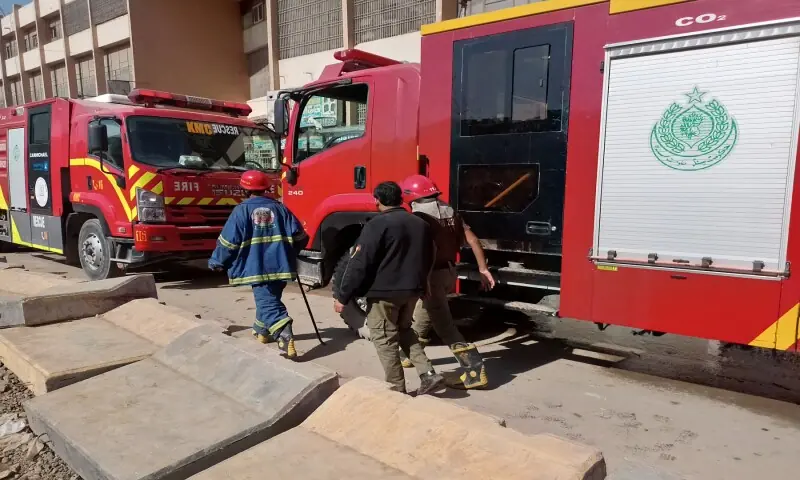
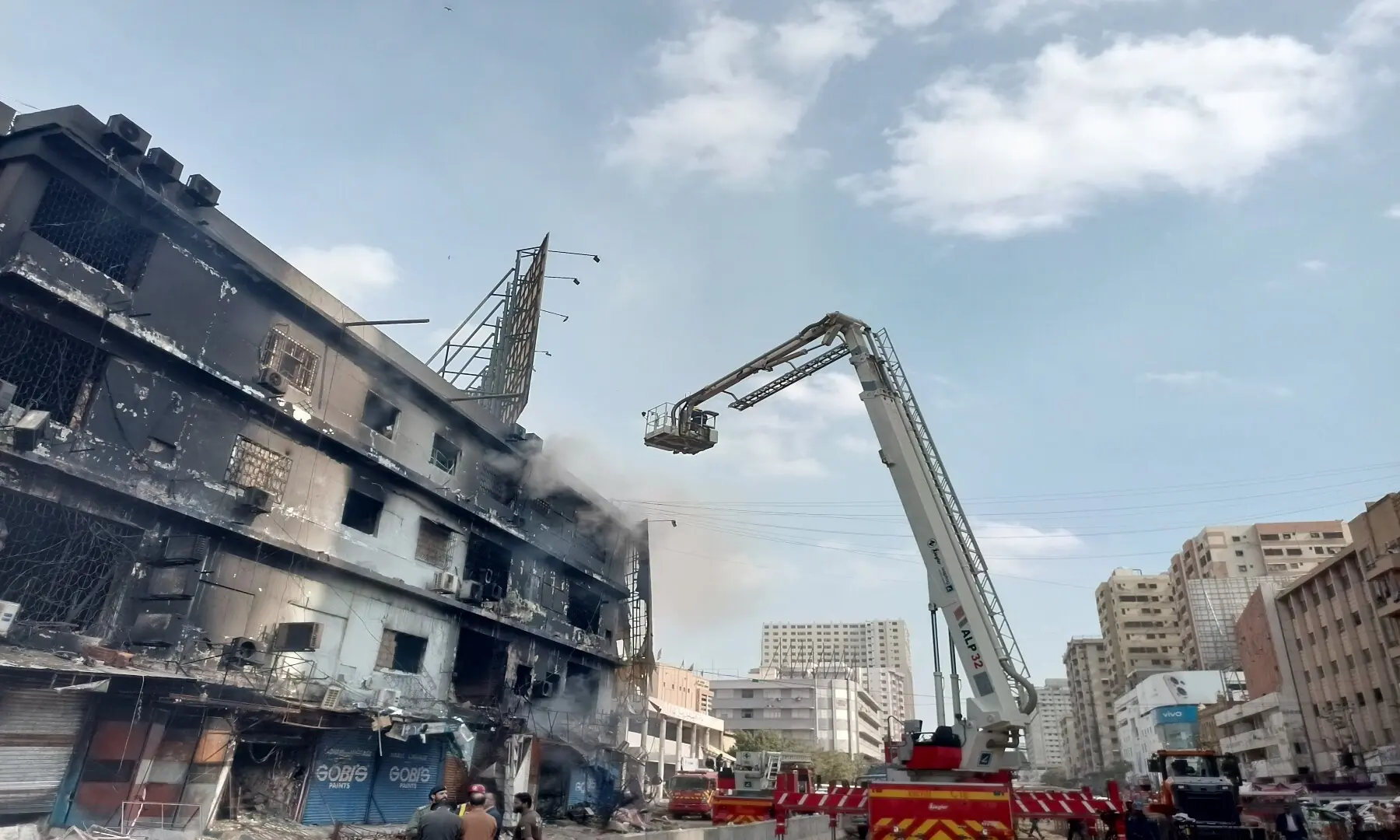
As the charred Gul Plaza building smoulders and cools down, the public anger surrounding it continues to flare.
Zafar Khan, a fire officer, has not left the site of this shopping mall in Karachi since the night of January 17, when the iconic building caught fire. The raging blaze claimed 28 lives, while rescue teams continue to search for more than 60 missing people amid the charred rubble.
Being the most visible part of the response, much of the blame has fallen on the firefighters. But days later, with smoke still seeping from the building, Zafar can still be seen standing amid the blackened debris and angry murmurs, explaining again and again why it has been such an uphill task to douse the fire.
Amid the accusations and smoke, lies a quieter truth that must not be forgotten: fires may erupt in minutes, but the conditions that allow them to rage unchecked fester over years and years.
Where plastic or similarly inflammable material is present, he says, fire has a habit of re-erupting the moment it receives oxygen. “That is why, even now, firefighting and cooling continue side by side.”
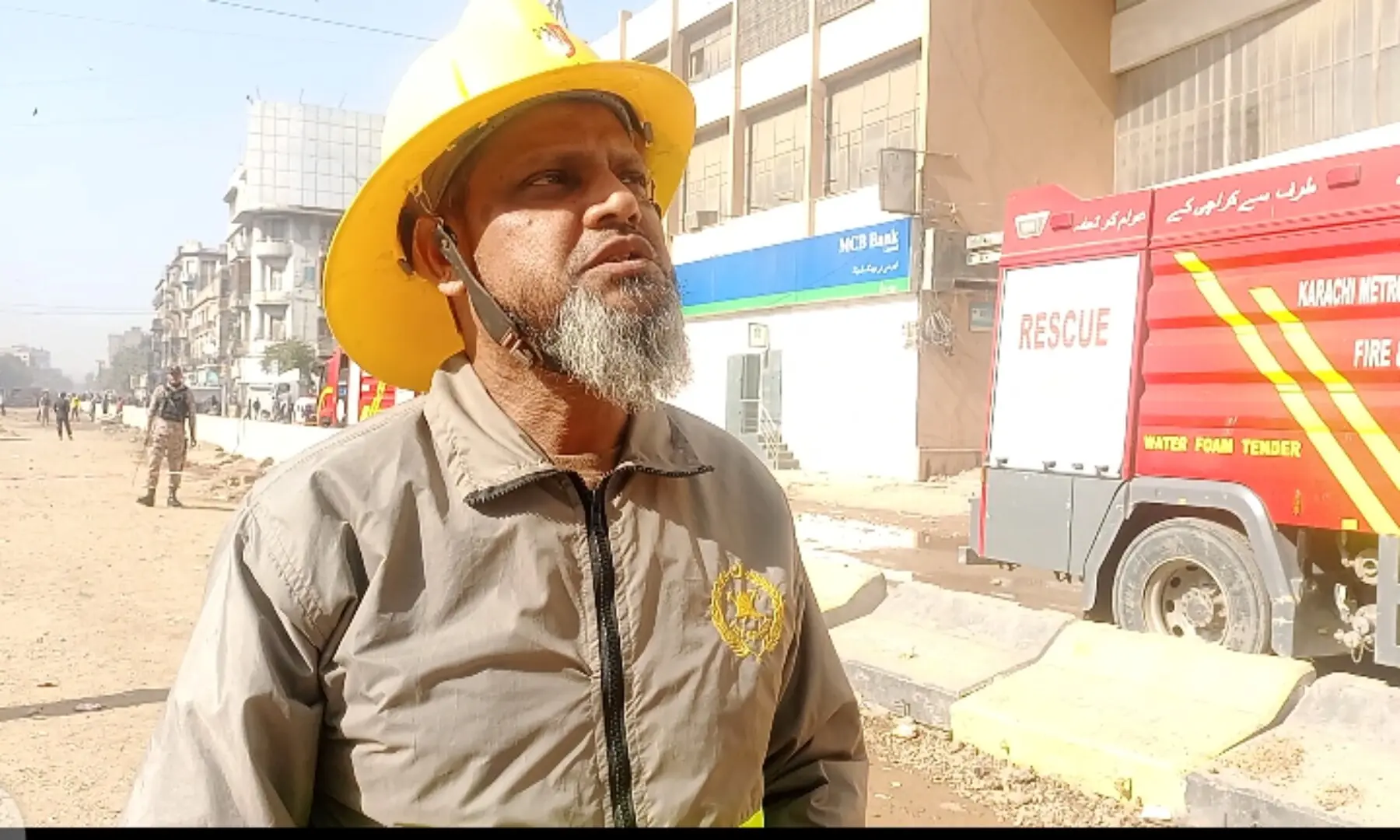
Smoke billowing from the building’s eastern side fuelled public suspicion that something inside was still burning, but firefighters had left it “unchecked”.
Karachi Metropolitan Corporation’s Chief Fire Officer, Humayun Khan, however, explains his crew’s side of the story, one that rarely surfaces or makes news.
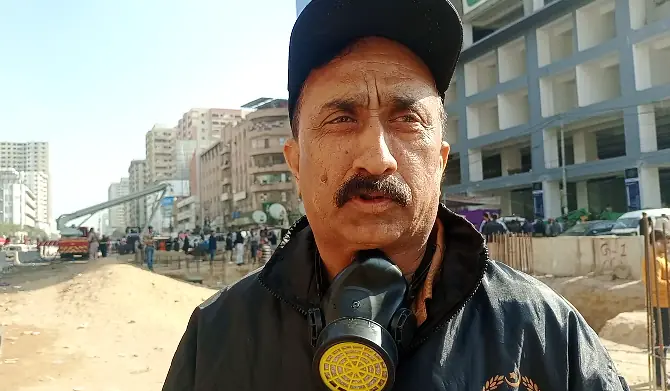
“We responded to the distress call about the fire at Gul Plaza almost immediately and reported here within 10 to 12 minutes of receiving that call,” he tells Dawn.
By the time fire tenders reached the site, however, a crowd of 10,000 to 12,000 people had gathered at the site, turning panic into a physical obstacle. “Yes, we understand their anxiety, but coming in our way in their panic is not right. In fact, it is a violation,” he adds.
He further explains how each distress call made to the helpline is digitally registered with the caller’s ID, followed by a confirmation call, a process which leaves little room for dispute over response time.
He also says how, upon arrival, firefighters had to face competing demands from shopkeepers, each insisting their shop be saved first, while ambulances that had reached the site earlier blocked the access routes for the fire trucks.
“There is a need to keep ambulance routes separate,” the fire chief says. “Ignoring such standard operating procedures [SOPs] can make even small incidents big.”
What puzzled him most was that many shopkeepers decided to stay inside the burning building instead of running outside immediately.
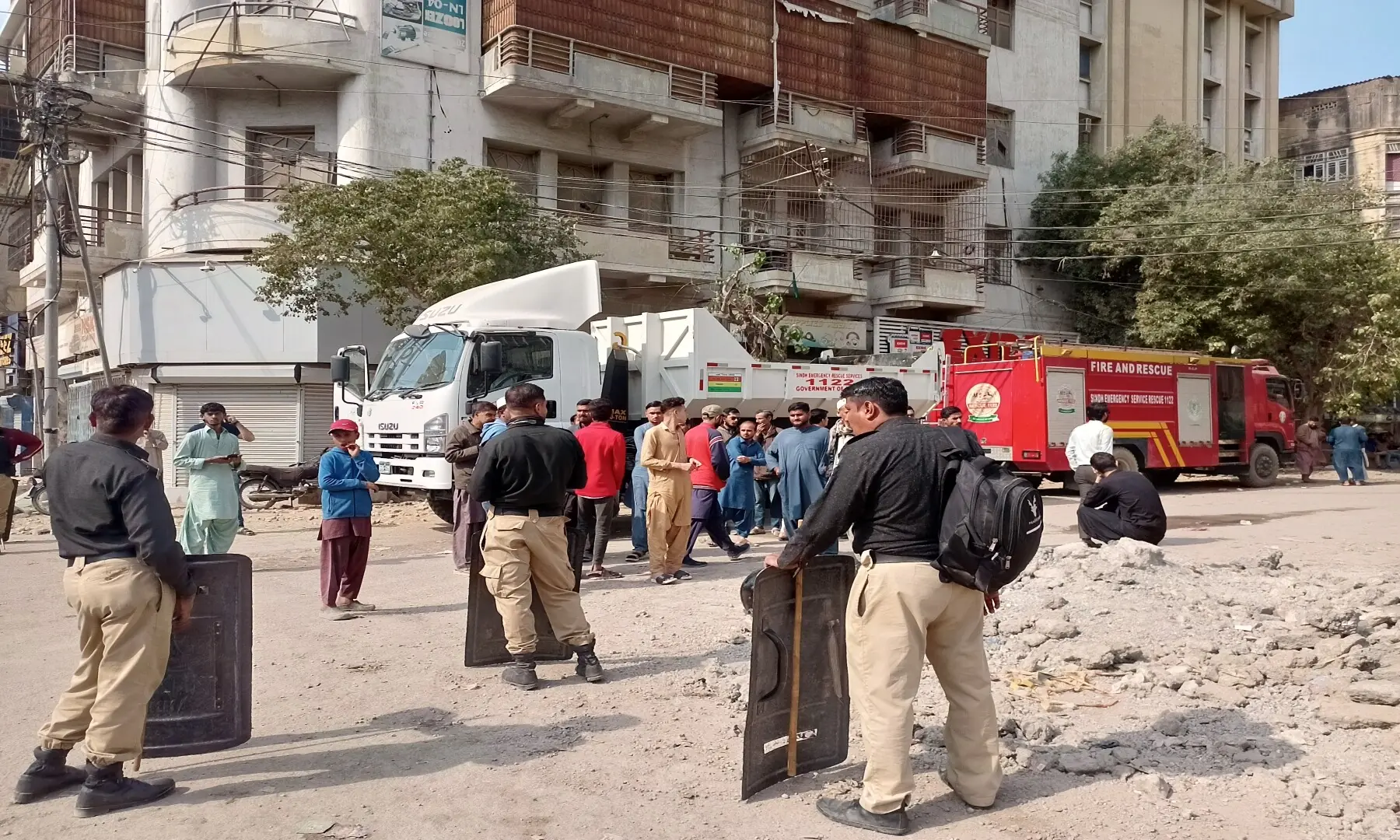
It is also a structure in danger of collapsing, he says, explaining, “We also need to be careful as we have already lost one firefighter when a portion of the building fell on him.”
He explains that in the past, there used to be civil defence training in schools, which was no longer imparted to students. “Do you know that fire doesn’t kill, but smoke and suffocation do?”
“If you stay low during a fire (stay close to the ground), you can easily crawl out to safety because smoke gathers about a foot above the ground,” he points out.
“But who’s to spread such awareness in a land where you have no time or use for fire drills?”
Back at the front of the blackened plaza, Zafar remains at his post, watching the structure exhale wisps of smoke. For him and his fellow firefighters, the work is not about public approval or blame, but about staying long enough to make sure the fire does not return, and leaving only when it is finally safe to do so.
Header image: Firefighters busy walking past fire trucks near Gul Plaza in Karachi, where a fire incident killed 28 people on Saturday, January 17, 2026. — Shazia Hasan

No comments yet. Be the first to comment!

Your trusted source for breaking news, in-depth analysis, and comprehensive coverage of today's most important stories.
Get daily updates on breaking news, exclusive interviews, and special features delivered to your inbox.
Have a news tip or want to get in touch with our editorial team? We're here to help.
Plot C3-C Jaypee Wishtown Sector 129 Noida Uttar Pradesh 201304 India