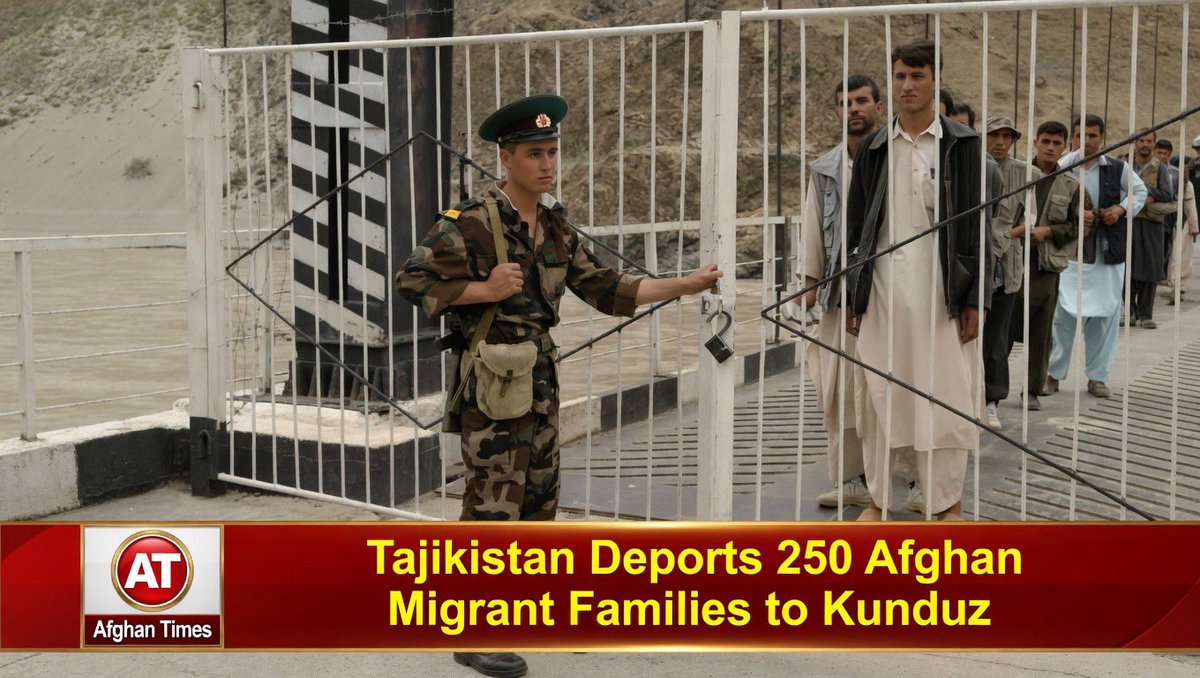
Tajikistan has reportedly deported 250 Afghan migrant families to Kunduz province, according to Afghan Times citing unnamed sources. The deportations were described as abrupt, leaving families with little time to gather belongings, settle personal affairs, or prepare for a difficult transition. This move adds to a growing pattern of Afghan migrants being repatriated from neighboring countries under challenging and often unplanned circumstances. Kunduz, already contending with economic strain and humanitarian needs, is likely to face heightened pressure as it absorbs the new arrivals, who may contend with housing shortages, unemployment, and limited access to services. The broader regional context includes other countries—Pakistan, Iran, Turkey, Qatar, and Oman—also returning Afghan refugees in recent months, many of whom report job losses and inadequate preparation for departure. Returnees express deep concerns about a future under Taliban rule, fearing restricted freedoms and uncertain prospects for sustainable livelihoods. From a policy perspective, the incident underscores the tension between border control and protection obligations; forcible or precipitous returns can raise refoulement and human rights concerns if asylum processes are bypassed. In my view, while there are legitimate governance reasons to manage migration, procedures must prioritize dignity and safety, ensuring voluntary returns where possible, access to due process, and robust post-return support. regional coordination, humanitarian assistance, and durable solutions—such as local integration or resettlement—are essential to prevent further suffering and instability in both Kunduz and the broader region.
Source: Statement from @AfghanTimes7
Public Engagement: 487 views • 53 likes • 16 comments • 10 shares
Published: May 5, 2026, 7:36 am
Editorial Note: This article is based on publicly available information and official statements. We strives for accuracy and fairness in all reporting.