
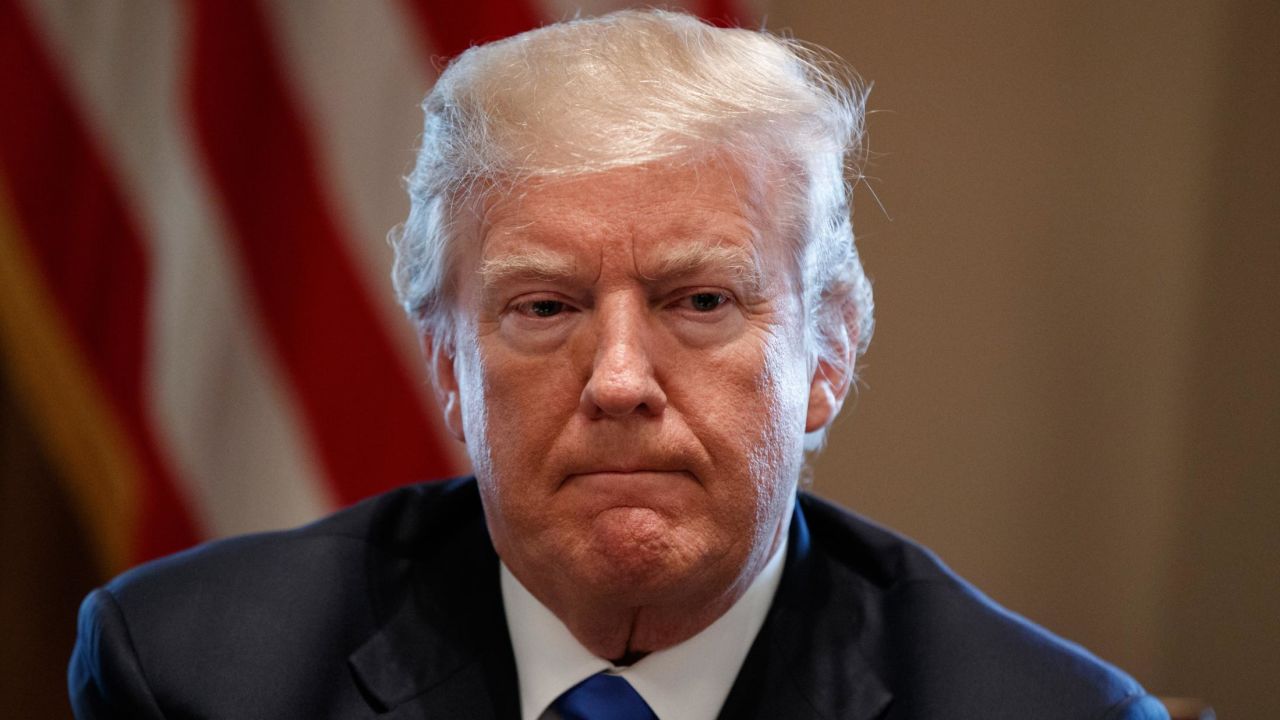
President Donald Trump has never been one to mince words, and his latest remarks about India are no exception. In a characteristically blunt public statement, Trump described India as a "hellhole," while reigniting his long-standing criticism of birthright citizenship and the H-1B skilled worker visa programme. For many Americans who have watched their job market, wages, and immigration system buckle under years of exploitation, Trump's words - however harsh - are landing on fertile ground.
At the heart of Trump's frustration is a simple but damning question: how did a visa programme designed to attract the world's brightest minds turn into one of the most systematically abused immigration pipelines in American history?
The Birthright Citizenship Loophole
Trump has long argued that birthright citizenship - the constitutional guarantee that any child born on U.S. soil is automatically an American citizen - is being exploited on an industrial scale. Foreign nationals, including significant numbers from India, travel to the United States specifically to give birth. That child becomes an instant American citizen. Years later, that child can sponsor parents, siblings, and extended family members for permanent residency. One birth. One visa. One family reunification chain that can eventually bring dozens of people into the country legally.
Trump put it plainly: "A baby is born here and then they bring their whole family over." Critics call this chain migration. Supporters call it family reunification. Either way, the numbers speak for themselves - and Americans are increasingly asking why a loophole this large has been allowed to persist for so long.
The H-1B Visa: Built for Brilliance, Used for Cheap Labour
The H-1B visa programme was conceived with a noble purpose: to allow American companies to recruit elite foreign talent in fields where domestic supply could not meet demand. Engineers, scientists, researchers, specialists - the best and the brightest the world had to offer. That was the promise.
The reality has been something else entirely.
Today, approximately 200,000 Indian nationals hold H-1B visas in the United States - the single largest national group within the programme by a margin that dwarfs every other country combined. India accounts for roughly 70 to 75 percent of all H-1B approvals issued every single year. That dominance did not happen by accident.
A network of Indian-owned and Indian-run IT outsourcing and staffing firms - companies like Infosys, Tata Consultancy Services, Wipro, and dozens of smaller body-shopping operations - discovered a flaw in the lottery-based H-1B system and exploited it ruthlessly. Because visas are allocated through a random annual lottery, the more applications a company submits, the higher its statistical odds of winning slots. These firms began mass-filing applications - not for one or two elite specialists, but for hundreds and thousands of interchangeable contract workers. The lottery was no longer a merit filter. It became a numbers game, and the firms that flooded it with the most applications won the most visas.
The workers imported under this scheme were often not the pioneering innovators the programme envisioned. Many were mid-level software developers and IT support staff paid wages that, while generous by Indian standards, undercut the salaries American workers in the same roles would command. American technology workers - skilled, experienced, and qualified - found themselves being replaced. Not because they lacked the talent, but because they cost more.
Americans Pushed Out of Their Own Job Market
The consequences have been felt across the American technology sector for over two decades. Dozens of high-profile cases have exposed the human cost of H-1B abuse. American IT workers at companies including Disney, Southern California Edison, and Abbott Laboratories were forced to train their own foreign replacements before being laid off - a ritual humiliation that became so common it earned its own grim nickname in the industry: "knowledge transfer."
These were not low-skilled workers who lost their jobs. These were experienced American professionals, many of whom had spent years building careers in technology, who were handed their termination notices and told that their final act of employment was to teach an H-1B visa holder how to do their job at a fraction of the cost.
For years, Washington looked the other way. Corporate lobbying from Silicon Valley and the outsourcing industry was powerful, well-funded, and effective. Politicians of both parties accepted campaign contributions and remained largely silent while the programme was hollowed out from within.
Trump Speaks What Many Have Long Thought
Trump's critics will argue that calling India a "hellhole" is offensive, undiplomatic, and counterproductive to U.S.-India relations. They are not entirely wrong on the diplomatic point. India is a significant strategic partner, a democratic counterweight to China in Asia, and home to a large and accomplished diaspora that has contributed enormously to American science, medicine, and technology.
But the bluntness of Trump's language should not be allowed to obscure the legitimacy of the underlying concern. The H-1B visa system has been gamed. That is not a fringe opinion - it is a documented, well-evidenced reality that immigration researchers, American labour unions, and even some voices within the technology industry itself have acknowledged for years. Approximately 200,000 Indians currently in the United States on H-1B status represent the product of a system that was supposed to serve American interests and instead became a tool for corporate cost-cutting at American workers' expense.
Saying so out loud is not xenophobia. It is accountability.
What Reform Must Look Like
The solution is not to demonise Indian workers as individuals - most came legally, followed the rules as they were written, and are simply trying to build better lives. The fault lies with the system that allowed mass exploitation, the corporations that engineered it, and the politicians who enabled it through inaction.
Real H-1B reform must include a genuine skills-based selection process that replaces the lottery, meaningful wage floor requirements that eliminate the financial incentive to hire foreign workers over equally qualified Americans, strict caps on the share of visas any single outsourcing firm can claim, and serious enforcement against companies that use the programme to replace rather than supplement American talent.
Birthright citizenship, too, deserves a serious legislative debate - one that the United States has avoided for too long out of political discomfort.
Trump's language may be inelegant. His delivery may be inflammatory. But the problems he is pointing at are real, they are large, and they have been ignored for far too long. America's immigration system was designed to serve America. It is long past time to hold it to that standard.


No comments yet. Be the first to comment!

Your trusted source for breaking news, in-depth analysis, and comprehensive coverage of today's most important stories.
Get daily updates on breaking news, exclusive interviews, and special features delivered to your inbox.
Have a news tip or want to get in touch with our editorial team? We're here to help.
Plot C3-C Jaypee Wishtown Sector 129 Noida Uttar Pradesh 201304 India