
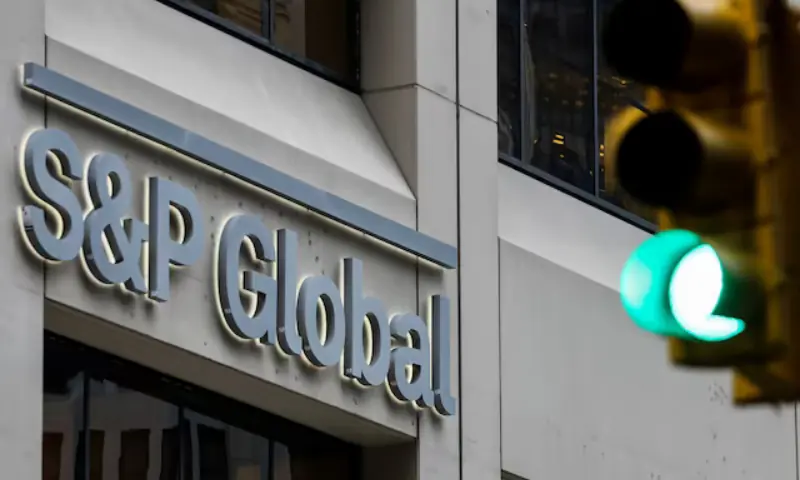
S&P Global Ratings on Wednesday upgraded Pakistan’s long-term sovereign credit rating to ‘B’ from ‘B-’, citing an improving external position and gradual macroeconomic stabilisation, while assigning a stable outlook.
The agency also affirmed the country’s short-term sovereign credit rating at ‘B’ and raised its transfer and convertibility assessment to ‘B’ from ‘B-’.
In a statement, the credit rating agency said the change in rating was based on its belief that the country had strengthened its institutional capacity, allowing it to implement reforms of the International Monetary Fund (IMF).
“Our upgrade on Pakistan is predicated on improved institutional stability that has helped to implement critical IMF programme reforms,” it said. “These reforms have quickened fiscal consolidation and rebuilt external buffers.”
It noted that the institutional settings of Pakistan had strengthened over the last two years, in particular highlighting the passage of the IMF’s Extended Fund Facility (EFF) $7 billion programme in September 2024 as “critical in restoring macroeconomic stability to the country and replenishing foreign reserves”.
Pakistan has met most of the EFF programme targets “thus far”, it said, allowing for timely IMF disbursements.
“A relatively stable political environment has been instrumental in this regard,” it added.
The statement said that the IMF programme had boosted foreign reserves, which as of the end of last month had climbed to $25.3bn —including the central bank’s gold holdings — from a multi-year low of $6.7bn in December 2022.
“This is more than sufficient to cover the government’s external principal payments of $16.4bn over the next 12 months,” it said.
S&P also stated that it believed multilateral and bilateral funding, alongside continued access to commercial borrowing, would diversify Pakistan’s external funding options.
Due to the government’s commitment to structural reforms, it forecast the general government deficit at four per cent of the GDP for FY27, down from close to 8pc in the “crisis years” of fiscal years 2022 and 2023.
It also noted that, although the State Bank of Pakistan (SBP) had tightened monetary conditions in April amid rising inflationary pressures from the Middle East conflict, domestic interest rates remained “much lower” than in previous years.
“Entrenched economic reforms will bring about a sustained period of steady growth and fiscal consolidation,” the agency said. “We anticipate sustained official financing will support Pakistan in meeting its external obligations and that the country will continue to roll over its commercial credit lines over the next 12 months.”
S&P added that, if the country’s commitment to fiscal consolidation were to diminish and cause current external or fiscal indicators to deteriorate — “contrary to expectations” — it may lower its ratings. It would also view surging interest rates as a sign of domestic financing stress.
On the other hand, the agency may raise its rating if fiscal and external metrics “continue to strengthen structurally”. It noted that this may happen if fiscal deficits narrow and government revenue continues to rise “while financing costs moderate, with strong expenditure controls”.
“Concurrently, improvements in Pakistan’s external indicators resulting in narrow net external debt falling below 100pc of current account receipts, and gross external financing needs [declining] to less than 100pc of the sum of current account receipts and usable reserves, may see the ratings raised,” it said.
Last month, British financial institution Barclays upgraded Pakistan’s dollar bonds to “overweight” after having lowered the rating the previous month, citing improved oil market prospects.
In April, Fitch Ratings, one of the world’s top three agencies, affirmed Pakistan’s long-term foreign currency issuer default rating (IDR) at “B-” with a “stable outlook”. However, it highlighted that the country’s high exposure to the global energy price shock remained a key risk, particularly if it led to a sharp drop in foreign exchange reserves.
Last year, S&P raised Pakistan’s sovereign credit rating to ‘B-’ from ‘CCC+’ and placed it on a “stable” outlook.

No comments yet. Be the first to comment!

Your trusted source for breaking news, in-depth analysis, and comprehensive coverage of today's most important stories.
Get daily updates on breaking news, exclusive interviews, and special features delivered to your inbox.
Have a news tip or want to get in touch with our editorial team? We're here to help.
Plot C3-C Jaypee Wishtown Sector 129 Noida Uttar Pradesh 201304 India