
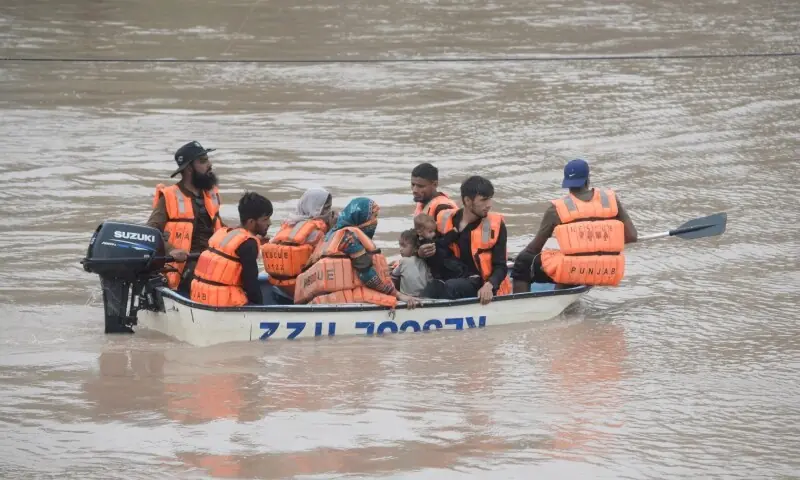
PAKISTAN has already paid a heavy human price this monsoon, even as another dangerous spell approaches. NDMA figures covering June 26 to Aug 7 record 151 deaths — 73 of them children — and 448 injuries, besides damage to more than 1,200 houses and dozens of bridges and kilometres of roads.
Chitral shows how quickly such destruction multiplies into other emergencies. Glofs, cloudbursts and flash floods have washed away bridges and severed roads, leaving communities unable to reach healthcare. Attendance at Lower Chitral’s district headquarters hospital has fallen by around 55pc, while patients from some isolated villages have stopped arriving altogether.
Doctors are already reporting gastroenteritis and dysentery and fear outbreaks of typhoid and malaria. Pregnant women unable to reach hospitals face particular danger, while post-traumatic stress is emerging among disaster-hit communities. The situation shows us how extreme weather kills not only through torrents and collapsing homes, but also by cutting people off from medicines, clean water and timely treatment.
NDMA, Rescue 1122, district administrations and the National Highway Authority have been involved in evacuations, relief distribution and restoration work. But each disaster exposes the distance between issuing warnings and protecting people. Chitral residents have complained of slow road clearance, delaying access to villages where medical needs are mounting. Warning equipment in parts of KP has previously been damaged or stolen, pointing to weaknesses in maintenance and local ownership.
District authorities must know which settlements require evacuation, where residents will be taken, how alerts will get to people without mobile connectivity and how food, medicines and medical teams will reach communities. Such plans must be prepared before an emergency, not improvised after valleys are cut off. Medical camps, safe-water points and emergency stocks should be positioned in vulnerable valleys.
There is particular urgency now. PMD’s Aug 7 outlook warns of moderate to heavy rainfall over the upper catchments of all major rivers from Aug 10 to 13, including KP, GB, Azad Kashmir, Islamabad and upper Punjab, with river and tributary flows expected to rise. Authorities should use this window to pre-position heavy machinery, boats, temporary bridges, fuel, food, drinking water, medicines and mobile clinics. Pregnant women, elderly people and patients requiring regular treatment should be identified for early evacuation, while alternative communication systems must be ready where conventional networks may fail. Shelters should be accessible and evacuation routes communicated before conditions deteriorate.
Pakistan cannot control the monsoon or the instability of its glaciers. But it can control how seriously it acts on warnings. With the warning already given, the task now is to ensure that the next spell does not deepen an already heavy human toll.
Published in Dawn, August 8th, 2026

No comments yet. Be the first to comment!

Your trusted source for breaking news, in-depth analysis, and comprehensive coverage of today's most important stories.
Get daily updates on breaking news, exclusive interviews, and special features delivered to your inbox.
Have a news tip or want to get in touch with our editorial team? We're here to help.
Plot C3-C Jaypee Wishtown Sector 129 Noida Uttar Pradesh 201304 India