
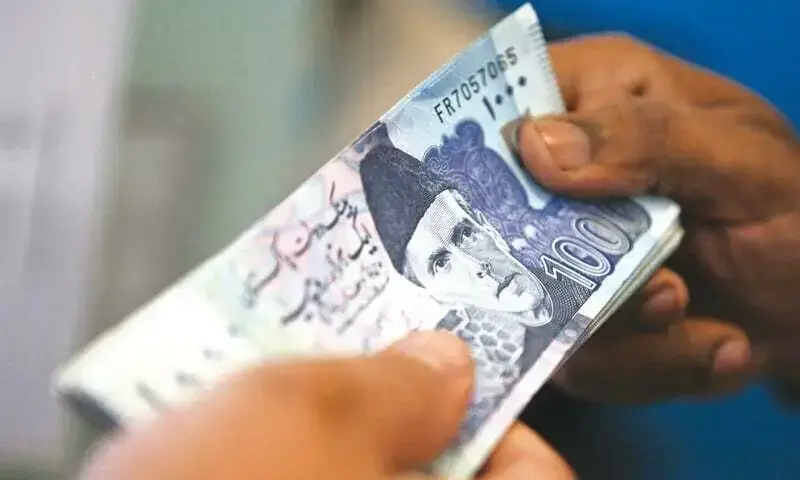
• Limited private sector lending options may persist
• Federal govt borrowing from banks rises to Rs5.9tr in FY26
• Private sector receives around Rs1.4tr
KARACHI: The country’s banking sector is likely to remain dependent on government borrowing for profits in the current fiscal year as limited private-sector lending opportunities continue to make banks one of the most lucrative sectors for the equity market and investors, financial industry sources said.
“The options are limited for lending to the private sector and the situation will remain the same this year as witnessed in FY26,” said a senior banker.
Despite a sharp increase in revenue during the last three years, government borrowing also rose rapidly during the period, resulting in almost 50 per cent of revenue going towards interest payments.
The Federal Board of Revenue achieved its revised target for FY26, but federal government borrowing from banks rose to Rs5.9 trillion compared to Rs5.4tr in FY25.
Bankers said the borrowing trend was likely to continue in the new fiscal year, while the private sector could receive even less credit than it did in FY26.
“If investment opportunities appear in the private sector, the situation could change, but policymakers are focusing only on external fronts while relying heavily on banks’ money for rising domestic spending. Their budget always leaves a fiscal gap to be filled by borrowed money or new taxes,” the banker said.
Some financial experts pointed to the declining advance-to-deposit ratio, saying it reflected weak private-sector growth. The advance-to-deposit ratio fell to 35.2pc in June 2026 from 38.1pc in June 2025.
They said the ratio was among the lowest in the region, contributing to rising domestic debt that consumed around Rs8tr in interest payments.
During FY26, the State Bank and the government repeatedly asked banks to boost lending to the private sector, particularly small and medium enterprises, to help lift economic growth from below 4pc.
However, the private sector received only around Rs1.4tr compared to Rs5.9tr borrowed by the government.
Bankers said nothing had changed in FY27, as neither the manufacturing sector was expected to show a sharp recovery nor the export sector likely to post significant growth.
“If domestic investment in the country is the lowest in the region, it clearly indicates that the private sector needs little money from banks,” said S.S. Iqbal, a money market expert.
The investment-to-deposit ratio stood at 104.2pc in June 2026, reflecting continued dependence on government securities. Banks remain eager to invest almost all their funds in government papers. The ratio was even higher at 106pc last year.
“With growing uncertainties in the region due to the five-month-long war, which is still continuing and spreading, there is little chance for domestic investors to take risks and borrow high-cost money from banks,” Mr Iqbal said.
Published in Dawn, August 1st, 2026

No comments yet. Be the first to comment!

Your trusted source for breaking news, in-depth analysis, and comprehensive coverage of today's most important stories.
Get daily updates on breaking news, exclusive interviews, and special features delivered to your inbox.
Have a news tip or want to get in touch with our editorial team? We're here to help.
Plot C3-C Jaypee Wishtown Sector 129 Noida Uttar Pradesh 201304 India