
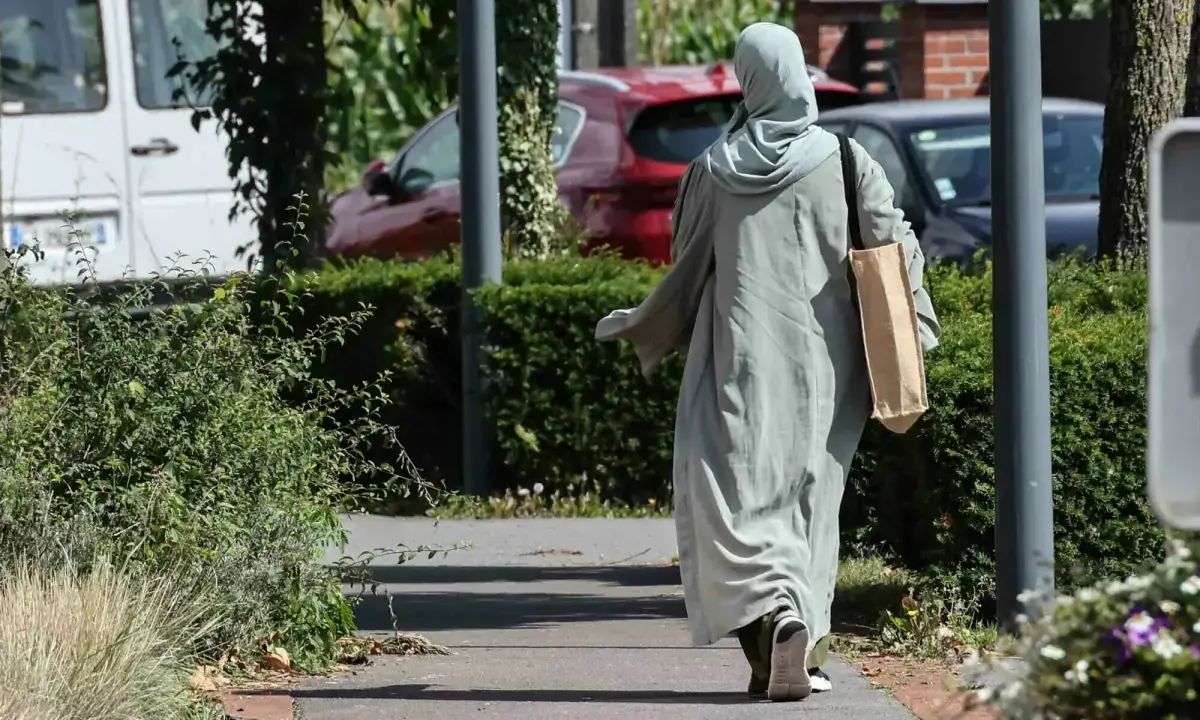
ISLAMABAD: The Senate Standing Committee on Finance and Revenue on Wednesday restricted Islamic banks from imposing abayas on their female staff, and called for following a modest national dress code for all irrespective of gender.
A meeting of the panel, presided over by Senator Saleem H. Mandviwalla, took up complaints regarding dress code instructions at certain banks, particularly those running Islamic operations.
Senator Dr Zarqa Suharwardy Taimur informed the committee that female employees were allegedly being compelled to wear abayas, although there was no such compulsion for male staff who were free to dress as they chose.
Senator Sherry Rehman argued that no employee should be forced to adopt any specific attire. She remarked that a shalwar kameez, as worn by ex-prime minister Benazir Bhutto, was also sufficient for other women, adding that the state had defined national dress for both genders.
State Bank Pakistan (SBP) Governor Jameel Ahmed said that the panel had also issued similar guidelines last year, which had already been conveyed to all banks.
The committee reiterated that it had only directed observance of a modest dress code and had never mandated any specific attire. It directed all banks to submit their dress code policies and instructed the SBP to circulate updated guidelines to ensure that no employee was subjected to unnecessary compulsion.
Meanwhile, Mandviwalla took exception to the non-implementation of the committee’s instructions for the payment of a budget honorarium to Senate staff. The committee was told that the matter was sub judice.
The payment of special honorariums, equivalent to five months’ salary, to various government and parliamentary employees on account of the annual budget has continued to be the subject of lobbying and political and bureaucratic influence.
Mandviwalla stressed that Parliament had passed a law and no court had the jurisdiction to interfere in such matters.
“Have we ever interfered in judicial matters? Have we ever asked why they are taking so much in salaries? How can they interfere in our domain?” he questioned, emphasising that he wanted payment of salaries to Senate employees.
He asked the finance ministry to return to the Supreme Court and inform it of the law, adding that a notice of privilege motion would be issued if the matter was not resolved within seven days.
Regarding the non-issuance of revised payslips to directors, staff and private secretaries of the Senate Secretariat by Accountant General Pakistan Revenues (AGPR), the committee chairman directed the authorities concerned to resolve the matter within seven days, warning that “failure to comply would result in referral to the Senate Privileges Committee”, a statement said.
Earlier this month, officials from the AGPR briefed the committee on the matter, seeking additional time for implementation. Finance Minister Muhammad Aurangzeb and the AGPR officials were non-committal about making the honorarium payments to Senate staff without first obtaining legal opinion.
The committee also reviewed complaints regarding difficulties faced by customers, particularly Politically Exposed Persons (PEPs), in dealing with commercial banks.
MNA Muhammad Moin Amir Pirzada informed the committee that despite its earlier directions to designate dedicated officers in banks including the SBP, no uniform standard operating procedures (SOPs) had been developed in this regard.
He said his bank account had been closed in April this year and despite repeated correspondence with the concerned bank and the SBP, no response had been received. He stressed the need for a standardised annual data update mechanism to prevent such incidents.
The SBP governor acknowledged that while regulations governing PEP-related cases already exist, the lapse occurred at the branch level. He informed the committee that a backup officer had been designated and assured members that a dedicated focal person would also be appointed in this regard.
The committee emphasised the need for uniform SOPs across the banking sector, while the finance minister termed standardised procedures “essential” to ensure effective customer service and grievance redressal, according to a statement.
The committee also discussed investment protection policies. Senator Manzoor Ahmed proposed extending the incentives currently available for the Reko Diq project to other investment projects across Pakistan.
Officials of the finance ministry informed the committee that only one project currently qualified under the existing criteria, and that the government’s fiscal position did not permit extending similar concessions. However, the finance minister assured the committee that future proposals would be considered within the available fiscal space.
Discussing taxes collected through electricity bills, Senator Kamil Ali Agha expressed concern over the burden on consumers.
Federal Board of Revenue (FBR) Chairman Muhammad Rashid Langrial informed the committee that approximately Rs476 billion had been collected through electricity bills, including Rs351bn in sales tax and Rs124bn in adjustable withholding income tax. He explained that sales tax on electricity formed part of the country’s overall sales tax regime.

No comments yet. Be the first to comment!

Your trusted source for breaking news, in-depth analysis, and comprehensive coverage of today's most important stories.
Get daily updates on breaking news, exclusive interviews, and special features delivered to your inbox.
Have a news tip or want to get in touch with our editorial team? We're here to help.
Plot C3-C Jaypee Wishtown Sector 129 Noida Uttar Pradesh 201304 India