
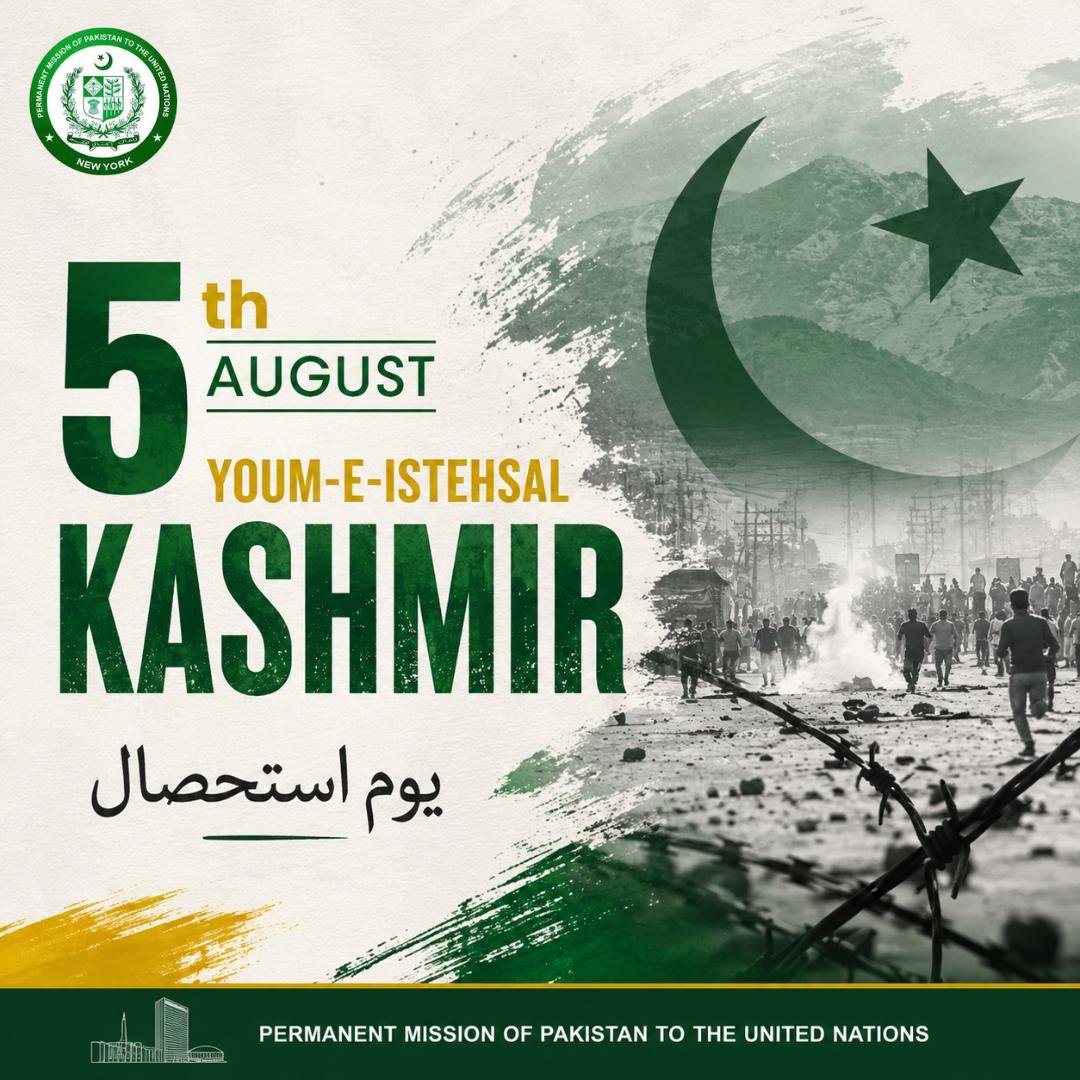
"Seven years ago on this day in 2019, India stripped Kashmiris of their statehood. The Day reminds the world of the grave consequences of India's illegal and unilateral actions, which sought to alter the internationally recognized disputed status of Illegally Indian Occupied Jammu & Kashmir (IIOJK), in flagrant violation of international law and the relevant resolutions of the United Nations Security Council."
On this day in 2019, India unilaterally revoked the special status of Jammu and Kashmir, a decision that has had profound implications on the region and its inhabitants. This move aimed to integrate the region more fully into India but disregarded international agreements and the longstanding disputed status acknowledged by the global community. The revocation of Article 370 and Article 35A was perceived as an attempt to alter the demographic and political landscape of Jammu & Kashmir, raising concerns about the rights of Kashmiris and the future of the region.
The consequences of this decision have been far-reaching. The region has witnessed heightened tensions, with increased military presence and restrictions on civil liberties. While some argue that integration into India promises regional development, critics highlight that the lack of political representation and civil rights for Kashmiris undermines these benefits. Moreover, many locals fear loss of identity and cultural heritage, stressing the importance of dialogue and inclusion for sustainable development in the region.
The international community's response has been varied. Several countries and human rights organizations have voiced concerns regarding human rights violations in the region. The United Nations has reiterated its commitment to facilitating a peaceful resolution, emphasizing the necessity of dialogue between India and Pakistan. On a constructive note, there have been calls for Pakistan and India to engage in negotiations to address the issues in Kashmir, promoting peace and stability in South Asia.
As we mark this anniversary, it is crucial to adopt a forward-looking approach that prioritizes dialogue, inclusivity, and respect for human rights. Both India and Pakistan have a shared responsibility to ensure peace in the region, respecting the aspirations of the Kashmiri people. Constructive engagement is key to resolving long-standing grievances, fostering a climate where development and cooperation can flourish. The focus should be directed toward building bridges rather than walls, recognizing that a stable and prosperous Kashmir is beneficial not only to its people but to the entire region.


No comments yet. Be the first to comment!

Your trusted source for breaking news, in-depth analysis, and comprehensive coverage of today's most important stories.
Get daily updates on breaking news, exclusive interviews, and special features delivered to your inbox.
Have a news tip or want to get in touch with our editorial team? We're here to help.
Plot C3-C Jaypee Wishtown Sector 129 Noida Uttar Pradesh 201304 India