
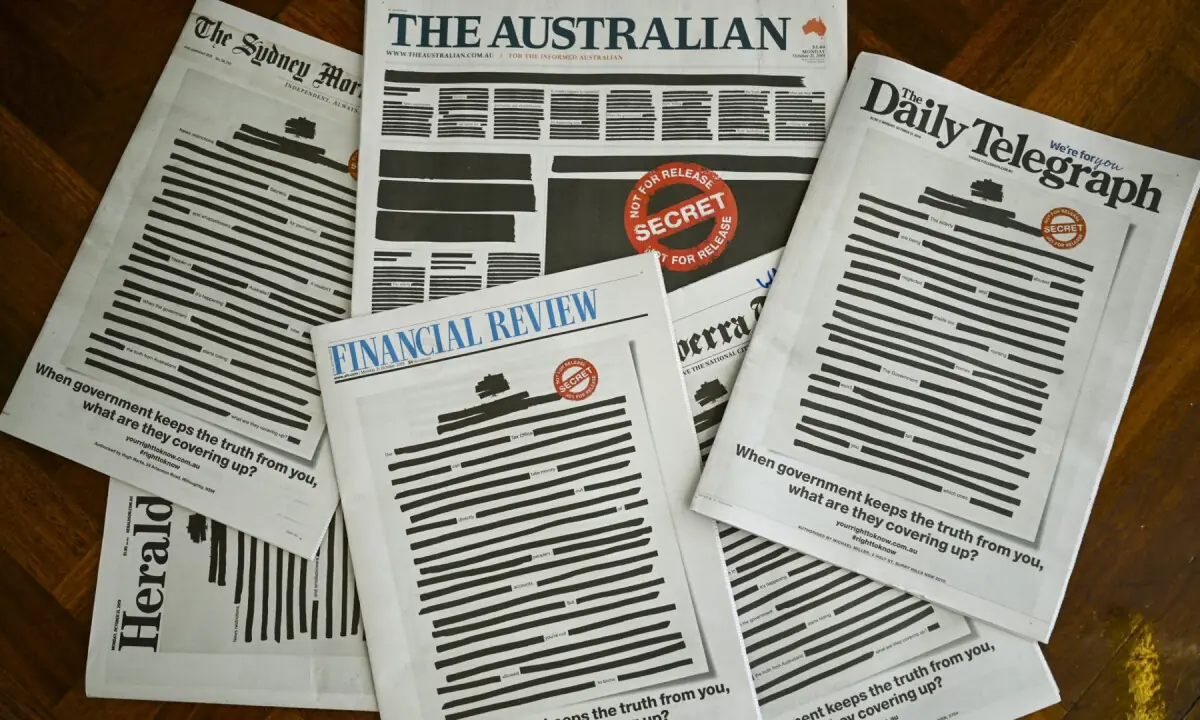
The Human Rights Commission of Pakistan (HRCP) and the Pakistan Federal Union of Journalists (PFUJ) have expressed concerns regarding media freedom after the government mandated foreign media personnel to seek permission for travelling to any city outside Islamabad, Lahore and Karachi for news coverage.
“The requirement that journalists obtain state approval to report from large parts of the country sends a chilling message: that critical reporting is unwelcome,” HRCP noted in a statement on Wednesday about the ‘Foreign Media Facilitation Guidelines 2026’.
Expressing its deep concern, the commission said the rules would “invariably institutionalise bureaucratic control over news gathering and risk deterring independent reporting on matters of public interest” rather than facilitate journalism.
“This is the latest in a growing pattern of restrictions on media freedom in Pakistan. From arbitrary curbs on reporting and increasing censorship to legal and administrative barriers, the space for independent journalism has continued to shrink,” the rights body highlighted.
It urged the government to withdraw the “restrictive measures and uphold its constitutional and international obligation to protect freedom of expression”.
Similarly, PFUJ “strongly condemned” the new rules and termed them as restrictions on press freedom.
In a statement issued on Thursday, PFUJ President Afzal Butt and Secretary General Arshad Ansari said the guidelines amount to “attacking the freedom of expression and putting curbs on press freedom”.
“The government has not only banned foreign journalists from visiting most of the areas of Pakistan except major cities, but they have also restricted the movement of Pakistani media persons working with international media outlets. They are not allowed to visit these areas on their own either,” it pointed out.
“How can foreign correspondents and their Pakistani colleagues perform their professional duties after this notification?” the PFUJ leaders asked.
They further asserted that the move would “only bring disrepute to Pakistan and damage its image”.
The PFUJ statement noted, “Pakistan is already ranked very low among the countries that have the worst record in press freedom. And the action of the government would add to it.”
It demanded that the government immediately “lift this ban” if it believed in democracy and press freedom, arguing that such a move would also impact the employment of Pakistanis working with international media outlets.
“Naturally, if Pakistani journalists working with global media outlets are unable to visit different areas, it means they would not be able to perform their professional responsibilities. Consequently, they would lose their jobs,” it contended.
The PFUJ leaders were quoted as saying that such actions “are taken in banana republics, not in countries that claim to follow democratic principles”.
“If the demands of PFUJ are not accepted, we would be left with no option but to resort to protest and demonstrations,” it warned.
According to the new guidelines, all foreign media personnel will now need a no-objection certificate (NOC) from the information ministry to travel to any city except Islamabad, Lahore and Karachi to produce “news content, story, video, film, documentary or social media content” for official use.
Additionally, under the new rules, all entities operating in Pakistan to facilitate foreign media “in any capacity” are also required to register with the ministry’s External Publicity (EP) Wing, as are non-journalists living in Pakistan who render services to foreign media.
The guidelines also specify that individuals’ press registration can be suspended or withdrawn for “acts against ideology, sovereignty, security or public order of Pakistan”, and if the EP Wing “deems appropriate at any stage”.

No comments yet. Be the first to comment!

Your trusted source for breaking news, in-depth analysis, and comprehensive coverage of today's most important stories.
Get daily updates on breaking news, exclusive interviews, and special features delivered to your inbox.
Have a news tip or want to get in touch with our editorial team? We're here to help.
Plot C3-C Jaypee Wishtown Sector 129 Noida Uttar Pradesh 201304 India