
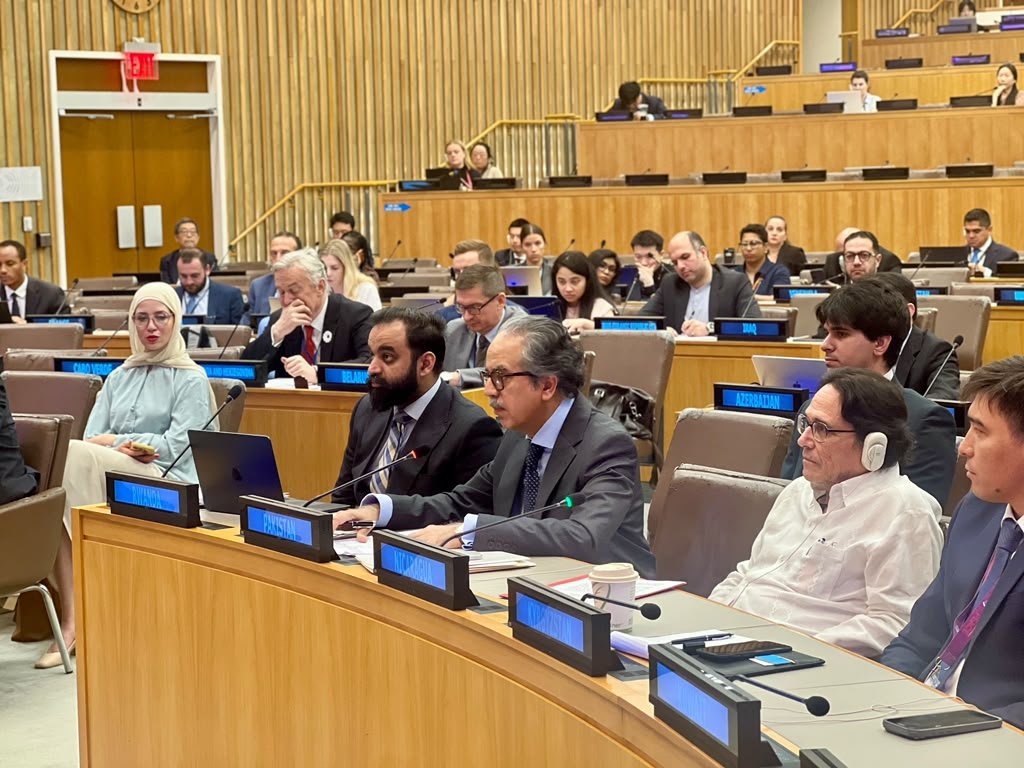
"Remarks by Ambassador Asim Iftikhar Ahmad,Permanent Representative of Pakistan to the UNAt the Briefing on the 2026 World Intelligence Conference and High-Level Meeting on Global AI Governance(31 July 2026)*****Excellencies,Distinguished colleagues,I thank Ambassador Fu Cong, and the Group of Friends for convening this timely briefing. 2. We congratulate China on the leadership and successful convening of the 2026 World Intelligence Conference and the High-Level Meeting on Global AI Governance. Deputy Prime Minister and Foreign Minister Muhammad Ishaq Dar represented Pakistan in the conference.3. The establishment of WAICO is both timely and significant. It provides a platform through which countries, particularly those of the Global South, can jointly shape technological cooperation, strengthen national capabilities and ensure that AI advances shared development rather than deepening existing inequalities.4. Pakistan is pleased to join this important initiative as a founding member. Prime Minister Shahbaz Sharif had earlier supported the initiative in his visit to China in May.Colleagues5. Developing countries need more than access to finished AI products. They need the data, computing capacity, models, tools and technical support required to develop and adapt AI themselves.6. In this regard, the outcomes of the Conference and the High-level Meeting provides a clear and action-oriented framework for future international cooperation.7. We believe three priorities stand out: i. First, Addressing the foundational capacities required for meaningful participation in the AI economy. This requires trusted cross-border data cooperation and multilingual datasets; better-connected computing infrastructure and affordable intelligent-computing services for developing countries; and an international open-source community that supports localized innovation on top of open models. ii. Second, the technological capacity should translate into development outcomes. Deeper AI applications, AI for good, and the joint cultivation of talent can support practical solutions in agriculture, healthcare, education, climate resilience, disaster preparedness and public-service delivery.iii. Third, innovation and governance must advance together. Cooperation on international standards, rules, safety and governance can help build trust and enable the responsible deployment of AI across borders.8. Pakistan is committed to ensuring that AI remains people-centred, serves shared prosperity and is advanced through inclusive international cooperation. We will continue to work closely with China, the Group of Friends and all partners to turn these commitments into practical cooperation.I thank you.****"
In a significant display of commitment to the future of intelligence (AI), Ambassador Asim Iftikhar Ahmad, the Permanent Representative of Pakistan to the UN, recently addressed the 2026 World Intelligence Conference and High-Level Meeting on Global AI Governance. This event, hosted successfully by China, marks a pivotal moment for nations keen on harnessing AI for sustainable growth.
The establishment of the World Intelligence Cooperation Organization (WAICO) is timely, particularly for countries in the Global South. Pakistan, through its representation at the conference by Deputy Prime Minister Muhammad Ishaq Dar, joins WAICO as a founding member. This step signals a commitment to collaborative technological advancement, supporting the notion that AI should foster shared development instead of exacerbating inequalities.
Ambassador Ahmad emphasized the necessity for developing nations to access foundational resources for meaningful participation in the AI economy. This includes essential elements such as data, computing capacity, and technical support. The outcomes from the conference lay out a clear framework for international cooperation to facilitate these resources effectively. Three critical priorities were highlighted:
The international response to these initiatives has largely been supportive, recognizing the global call for collaboration in technology governance. Pakistans proactive stance underlines a shared understanding among nations that AI must serve social good, with equitable access to AI tools and expertise. Cooperation with countries leading the charge in AI development, such as China, is essential for achieving effective outcomes.
As the world navigates the complexities of AI governance, Pakistan remains committed to ensuring that advancements are centered around people and collective prosperity. The nation looks forward to working closely with its global partners to transform these initiatives into actionable outcomes that will benefit all, especially underprivileged communities. Ambassador Ahmad concluded his remarks with a strong invitation for all nations to unite in this critical endeavor, reaffirming Pakistans dedication to fostering inclusive international cooperation.


No comments yet. Be the first to comment!

Your trusted source for breaking news, in-depth analysis, and comprehensive coverage of today's most important stories.
Get daily updates on breaking news, exclusive interviews, and special features delivered to your inbox.
Have a news tip or want to get in touch with our editorial team? We're here to help.
Plot C3-C Jaypee Wishtown Sector 129 Noida Uttar Pradesh 201304 India