
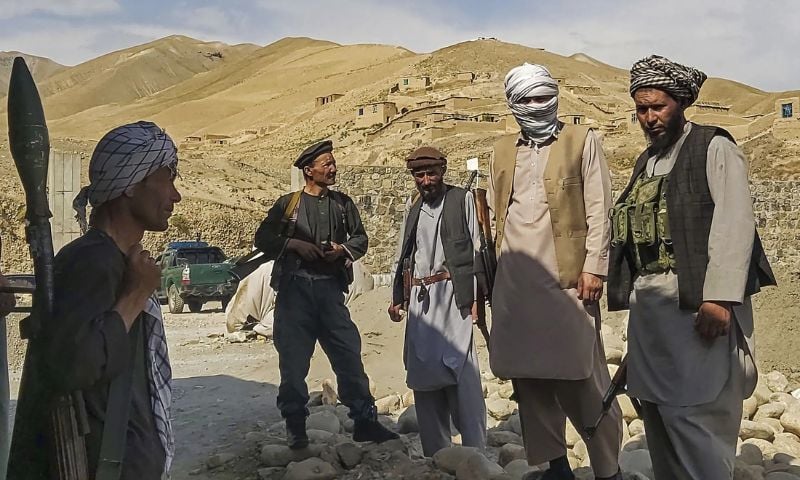
KABUL / ISLAMABAD - Anti-Taliban armed groups are expanding their operations across Afghanistan, with new resistance factions emerging and established groups intensifying attacks, particularly in the northeastern province of Badakhshan. The growing opposition reflects rising public discontent with Taliban governance, according to regional observers.
Anti-Taliban groups’ activities across Afghanistan are growing at a larger and faster scale.
- Zard si Gana (@ZardSi) August 5, 2026
These groups have massive public support and are determined to end the Taliban terrorist regime as soon as possible.
We wish the Afghan nation freedom from the extremist Taliban 🇦🇫 pic.twitter.com/PnTiBKVuFA
A new anti-Taliban armed group has reportedly emerged in Faryab province, named the Jabha-e-Rah-e-Bakhsh Liberation Front under the leadership of Gul Mohammad Pahlawan. The group has claimed responsibility for an attack on Taliban forces in the province.
This follows the formal announcement by the Afghanistan United Front (AUF) , led by former Afghan National Army General Sami Sadat, of "Operation Muharib" -a phased armed campaign against the Taliban. Sadat, appearing in ANA uniform, declared an end to negotiations and pledged to fight the Taliban alongside groups including the TTP and ISIS-K.
The northern province of Badakhshan has emerged as the central hub of resistance activity. Clashes have been reported across multiple districts, including Zebak, Yaftal-e Payin, Argo, and Darayem.
Key developments include:
Targeted Attacks: The Afghanistan Freedom Front (AFF) launched a rocket attack on a Taliban military convoy traveling from Kabul to Badakhshan on July 25, reportedly killing seven personnel and injuring six others.
Drone Downings: The AFF claimed to have shot down two Taliban military drones in Zebak district and prevented Taliban helicopters from landing by opening heavy fire.
Commander Eliminations: Four Taliban commanders-including Mullah Shadab, commander of the Zebak Unit-were reportedly killed in Badakhshan clashes.
Temporary Gains: On July 17, the Sipahiyan-e-Mihan (Soldiers of Homeland Front) , led by former ANA officer Qayum Malang, briefly seized the Yaftal-e-Payin district center-marking the first reported temporary loss of a district by the Taliban since returning to power.
Afghan media reports indicate that more than 2,000 volunteers have joined the National Resistance Front (NRF) in recent days from provinces including Badakhshan, Balkh, Panjshir, and Kunduz. Analysts attribute the growing resistance to concerns over:
Ethnic discrimination and marginalization (particularly of Tajik communities in Badakhshan)
Restrictions on education and women's rights
Economic grievances, including farmers losing revenue after the poppy ban
The NRF's Fazal Ahmad Manawi has publicly welcomed strikes against the Taliban, stating: "Thank God the Afghan Taliban were being eliminated... the end of oppression from God's land is a great blessing".
Badakhshan's mountainous terrain, borders with Tajikistan, China, and Pakistan, and historical role as a bastion of anti-Taliban resistance make it a strategically significant location for opposition groups. The AUF's Sadat has also announced plans to target the Taliban in their political hub along the Kandahar-Spin Boldak highway, while former Afghan Vice President Amrullah Saleh has asserted that resistance against the Taliban will become more organized, ultimately leading to the end of its rule.
While analysts note that the fragmented resistance does not yet pose an existential threat to the Taliban, the escalating violence and expansion of opposition groups point to a rapidly deteriorating security environment in northern Afghanistan.

No comments yet. Be the first to comment!

Your trusted source for breaking news, in-depth analysis, and comprehensive coverage of today's most important stories.
Get daily updates on breaking news, exclusive interviews, and special features delivered to your inbox.
Have a news tip or want to get in touch with our editorial team? We're here to help.
Plot C3-C Jaypee Wishtown Sector 129 Noida Uttar Pradesh 201304 India
