
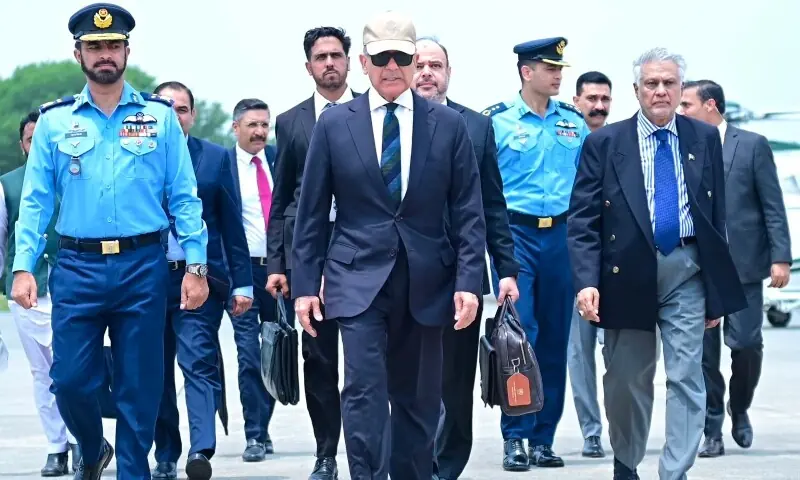
TEHRAN - Pakistan's Chief of Defence Forces, Field Marshal Syed Asim Munir, has arrived in the Iranian capital to attend the official funeral ceremonies for the late Supreme Leader of the Islamic Republic of Iran, Ayatollah Ali Khamenei, who passed away after a prolonged illness, according to official Iranian state media.
The high-level military delegation's presence underscores the deep and rapidly expanding strategic ties between Islamabad and Tehran - a relationship that has been significantly strengthened in recent months through Pakistan's successful mediation efforts in the broader regional conflict between Iran and the United States.
⚡️🇵🇰 Field Marshal Syed Asim Munir has arrived in Iran to attend the official funeral of Ali Khamenei, the former Supreme Leader of the Islamic Republic of Iran.
- Zard si Gana (@ZardSi) July 3, 2026
Iran’s former Supreme Leader Ali Khamenei had great respect for Field Marshal Syed Asim Munir. pic.twitter.com/8HIUt257kU
Field Marshal Munir, who has personally led multiple rounds of shuttle diplomacy between Tehran and Washington - including historic direct talks hosted in Islamabad - was received by senior Iranian officials and military commanders upon his arrival at Mehrabad International Airport. The warm reception reflected the profound respect Iran's leadership holds for Pakistan's top military officer.
A Relationship Built on Mutual Respect
Diplomatic sources in Tehran indicate that the late Supreme Leader held Field Marshal Munir in exceptionally high regard, viewing him as a trusted interlocutor and a key figure in de-escalating tensions that threatened to engulf the entire region. The two leaders reportedly developed a strong personal rapport during Munir's multiple visits to Tehran over the past year, with Khamenei personally appreciating Pakistan's principled stance of neutrality and its persistent efforts to bridge the gap between Iran and the United States.
According to sources close to the Iranian leadership, Khamenei had often referred to Field Marshal Munir as a "man of his word" and a "genuine peacemaker" - rare praise from a leader known for his deep skepticism of foreign military officials.
Pakistan's Growing Diplomatic Role in the Region
Field Marshal Munir's presence at the funeral is not merely ceremonial. It reaffirms Pakistan's unwavering commitment to regional stability and its close ties with the Iranian leadership during this period of transition. Pakistan has emerged as the primary mediator between Iran and the United States, with US President Donald Trump and Secretary of State Marco Rubio both publicly praising Pakistan's efforts.
The funeral proceedings, expected to draw dignitaries and heads of state from across the globe, including representatives from China, Russia, Turkiye, and various Gulf nations, will be a moment of immense historical significance. Field Marshal Munir's participation sends a clear message: Pakistan stands with Iran in its moment of national grief, just as Iran has stood with Pakistan in times of need.
The Legacy of Ali Khamenei
Ayatollah Ali Khamenei, who served as Iran's Supreme Leader for over three decades, leaves behind a complex legacy. He navigated Iran through periods of intense international isolation, economic sanctions, and regional conflicts, while maintaining Iran's position as a major power in the Middle East.
In recent months, however, Khamenei had shown a willingness to engage diplomatically, authorizing Iranian negotiators to travel to Islamabad for talks with US officials - a move that surprised many observers and was widely attributed to the trust he had developed in Pakistan's mediation.
What Comes Next
As Iran enters a new chapter in its history, questions remain about the succession process and the future direction of Iranian foreign policy. However, analysts agree that Pakistan's role as a trusted mediator is unlikely to diminish, given the institutional relationships that Field Marshal Munir has cultivated with Iran's military and political leadership.
One thing is certain: Pakistan's diplomatic footprint in the region continues to grow, and Field Marshal Syed Asim Munir has emerged as one of the most respected and influential military leaders in the Islamic world.

No comments yet. Be the first to comment!

Your trusted source for breaking news, in-depth analysis, and comprehensive coverage of today's most important stories.
Get daily updates on breaking news, exclusive interviews, and special features delivered to your inbox.
Have a news tip or want to get in touch with our editorial team? We're here to help.
Plot C3-C Jaypee Wishtown Sector 129 Noida Uttar Pradesh 201304 India
