
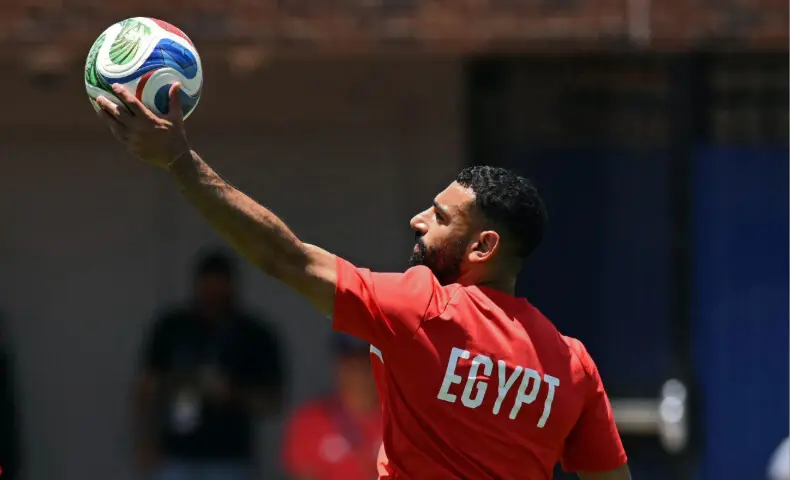
Egypt have reached the FIFA World Cup knockout stage for the first time in their history, with Mohamed Salah once again at the heart of their success. But while the Pharaohs have long embraced him as their greatest modern footballer, can this campaign persuade the rest of the world to view him the same way?
There was once an Egyptian king who ruled on the banks of the River Mersey. For nine years, Liverpool’s faithful sang his name as Mohamed Salah cemented his place among the club’s greatest players.
Back home, however, Salah never wore a crown. He carried something heavier — the hopes of a nation that had spent decades searching for a place among football’s elite.
On Friday, in the city of Dallas, Texas, those hopes will accompany Egypt into unfamiliar territory. For the first time in their history, the Pharaohs will play a FIFA World Cup knockout match, with the man who conquered Anfield now attempting to add another defining chapter to a career that has already transformed Egyptian football.
Egypt had never won a World Cup match before this tournament, let alone reached the knockout stages. That finally changed with a 3-1 victory over New Zealand. Draws against Belgium and Iran then saw the Pharaohs progress unbeaten into the last 32 for the first time in their history.
At the heart of that historic run was Salah. Deployed in a freer, more central attacking role by head coach Hossam Hassan — himself an Egyptian great — the 34-year-old has been at the centre of almost everything the Pharaohs have done well — scoring, creating and thriving in a campaign that has already rewritten his country’s World Cup history.
Yet, for all that Egypt have achieved in the United States, it is perhaps Salah’s legacy that stands to gain the most from the Pharaohs’ remarkable campaign.
The 34-year-old left Liverpool this summer as one of the greatest players ever to represent the club, having won the Premier League, the Champions League, the FA Cup and two League Cups while rewriting goalscoring records along the way. Few footballers of his generation can rival what he accomplished at club level.
International football, however, has offered fewer opportunities to build a similarly decorated legacy. That has owed less to Salah’s performances than to Egypt’s own history on the global stage.
Before Salah emerged as the face of Egyptian football, the Pharaohs had spent nearly three decades away from the World Cup. His dramatic stoppage-time penalty against Congo in 2017 ended that wait, sending Egypt to the finals for the first time since Italia ’90.
Although they failed to progress in Russia and missed out on Qatar 2022, Salah again led the charge during qualification for the ongoing tournament, scoring nine goals and providing three assists as Egypt returned to football’s biggest stage.
This time, however, the story has been different. Egypt have not merely qualified; they have broken new ground. For perhaps the first time in his international career, Salah is not simply carrying his country’s hopes. He is leading a team capable of fulfilling them.
Few images captured that better than the celebrations after Egypt secured their place in the knockout rounds.
Salah, so often reserved in public, danced to Egyptian songs in the dressing room before joining supporters celebrating in the streets. For a player who has spent much of the last decade shouldering his nation’s expectations, it was a rare moment when the burden gave way to shared joy.
Yet Salah’s significance extends beyond the goals he scores or the trophies he has lifted.
He emerged from Nagrig, a small village in Egypt’s Nile Delta, to become the face of one of England’s biggest clubs at a time when football’s brightest stars largely came from Europe or South America. As an Egyptian, an Arab and an African, he challenged long-held perceptions about who could occupy the sport’s biggest stages.
His success resonated far beyond Liverpool. Across North Africa and the Middle East, Salah became proof that a footballer from the region could dominate the Premier League without compromising his identity.
He remained visibly Egyptian throughout his rise, speaking proudly of representing his country and returning every international window carrying expectations that few players of his generation have had to shoulder.
Yet despite all this, Salah seldom occupies the same space in conversations about football’s defining players of the last decade.
Part of that owes to timing. His peak coincided with the closing years of Lionel Messi and Cristiano Ronaldo’s extraordinary dominance, before international triumphs further elevated the legacies of players such as Luka Modric and Lionel Messi. Individual awards often followed those narratives.
Salah’s own story unfolded differently. While his achievements with Liverpool comfortably placed him among the modern greats, he rarely enjoyed the international platform available to many of his contemporaries.
Representing Egypt meant fewer opportunities to compete for the game’s biggest prizes and fewer occasions for the world to witness his brilliance deep into major tournaments.
That is what makes this World Cup feel different.
The Round-of-32 clash against Australia represents more than Egypt’s next assignment. It offers Salah another opportunity to strengthen a legacy that has already exceeded almost every expectation placed upon an Egyptian footballer.
Whether Egypt’s remarkable journey continues or ends in Texas, Salah’s place in his country’s football history is already secure. The only question is whether the wider football world will eventually accord him the same stature that Egypt has long since done.

No comments yet. Be the first to comment!

Your trusted source for breaking news, in-depth analysis, and comprehensive coverage of today's most important stories.
Get daily updates on breaking news, exclusive interviews, and special features delivered to your inbox.
Have a news tip or want to get in touch with our editorial team? We're here to help.
Plot C3-C Jaypee Wishtown Sector 129 Noida Uttar Pradesh 201304 India